
CORRECTION: A previous version of this story included a misspelling of Kalyani Parkale.
We regret the error.
Restaurant and cafe owners across Melbourne’s eastern suburbs are waiting to see how the next month will play out before rising prices, but the pressures of increasing fuel levies and slowing foot traffic could force action.
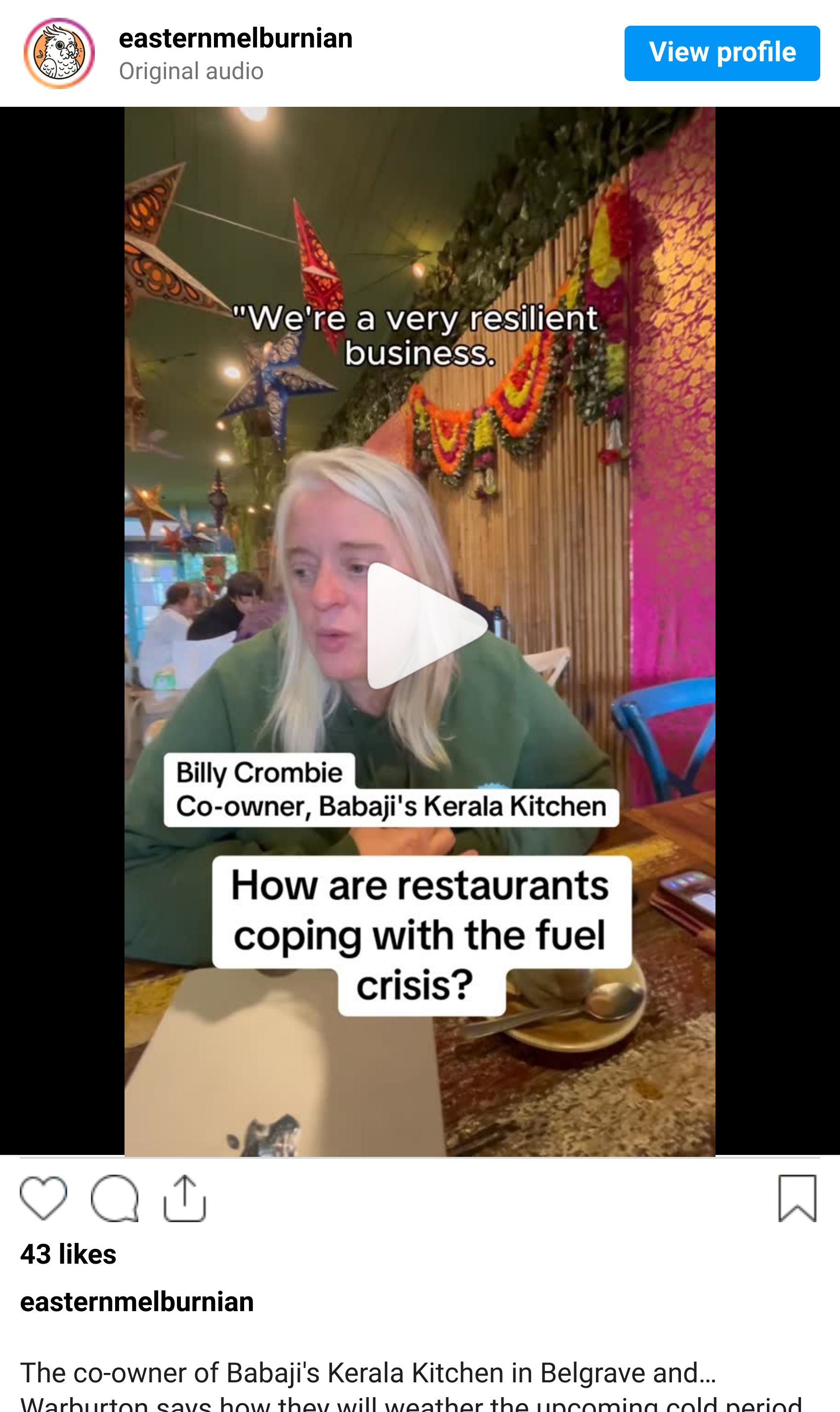
Babaji’s Kerala Kitchen brought its Indian food and culture to the small Yarra Valley township of Warburton in November 2023.
Owners Billy and Max Crombie put their house on the line to launch their second location and are now sitting on the edge of launching a third, but are unsure whether the leap is too risky.
⛽ What’s happening? Limited supply and rising demand of fuel due to the Middle East conflict have pushed petrol and diesel prices higher, with the median price of unleaded in Melbourne’s east at about $2.16 per litre and the median cost for diesel at around $3.15.
A number of suppliers have begun to charge emergency fuel levies on top of their service costs.
🇮🇳 🇦🇺 A long and winding road: Monbulk local Billy Crombie met her husband Max 18 years ago in the beachside town of Varkala in the Indian state of Kerala.

Husband and wife Max Kamil Hassan and Billy Crombie with Babaji’s head chef Jithin Pattiyal.
The pair began their hospitality journey with a market stall selling their food 13 years ago, followed by a take-away and 65-seat restaurant spot in Belgrave about seven years later and a second, 200-seat location in Warburton in November 2023.
👀 Uncertain future: Billy told the Eastern Melburnian the pair were considering a third restaurant, but were reluctant to do so in the current economic climate.
🗣️“I have my house on the line,” said Crombie. “If Babaji’s Warburton is not successful, I personally will lose my house because I owe money to be able to set up Babaji’s Warburton.”
⏰ New day, new hurdles: Crombie said she could not guarantee they wouldn’t have to bump up their prices to account for increased fuel levies from their suppliers or reduced patronage.
🗣️ “It isn't about greed, it's about survival,” said Crombie. “Are we going to be down to 30 percent of our turnover? We’re a very resilient business, but nobody knows what’s coming.”
🪙 Digging deep: The fuel crisis is not just impacting larger businesses, but small local business too. Boronia’s Two Cats Espresso Bar is among those dealing with new costs.
Owner Kalyani Parkele said while her suppliers used to waive the delivery fee if she ordered past a certain threshold, they were now placing an extra $8 to $10 on top of each delivery, adding up to $40 to $50 per week.
🗣️ “A month ago, we were not spending that additional cost for the same product,” Parkele told the Eastern Melburnian. “For a small business, that becomes too much week on week.”

Two Cats Espresso Bar owner Kalyani Parkale
☕ Brews bypassed: A mother of three, Parkale opened the business last January, leaving her full-time job and investing her family’s savings.
Parkale said the timing of the increased bills was unfortunate, as she had seen a 50 percent reduction in her sales revenue since rail station upgrades began.
🗣️ “The cost is just going up and the income is going down, so it’s not balancing,” said Parkale.