

The smack of flesh on concrete, a mouth desperately panting for water and hundreds of dead flying foxes scattered across the parkland.
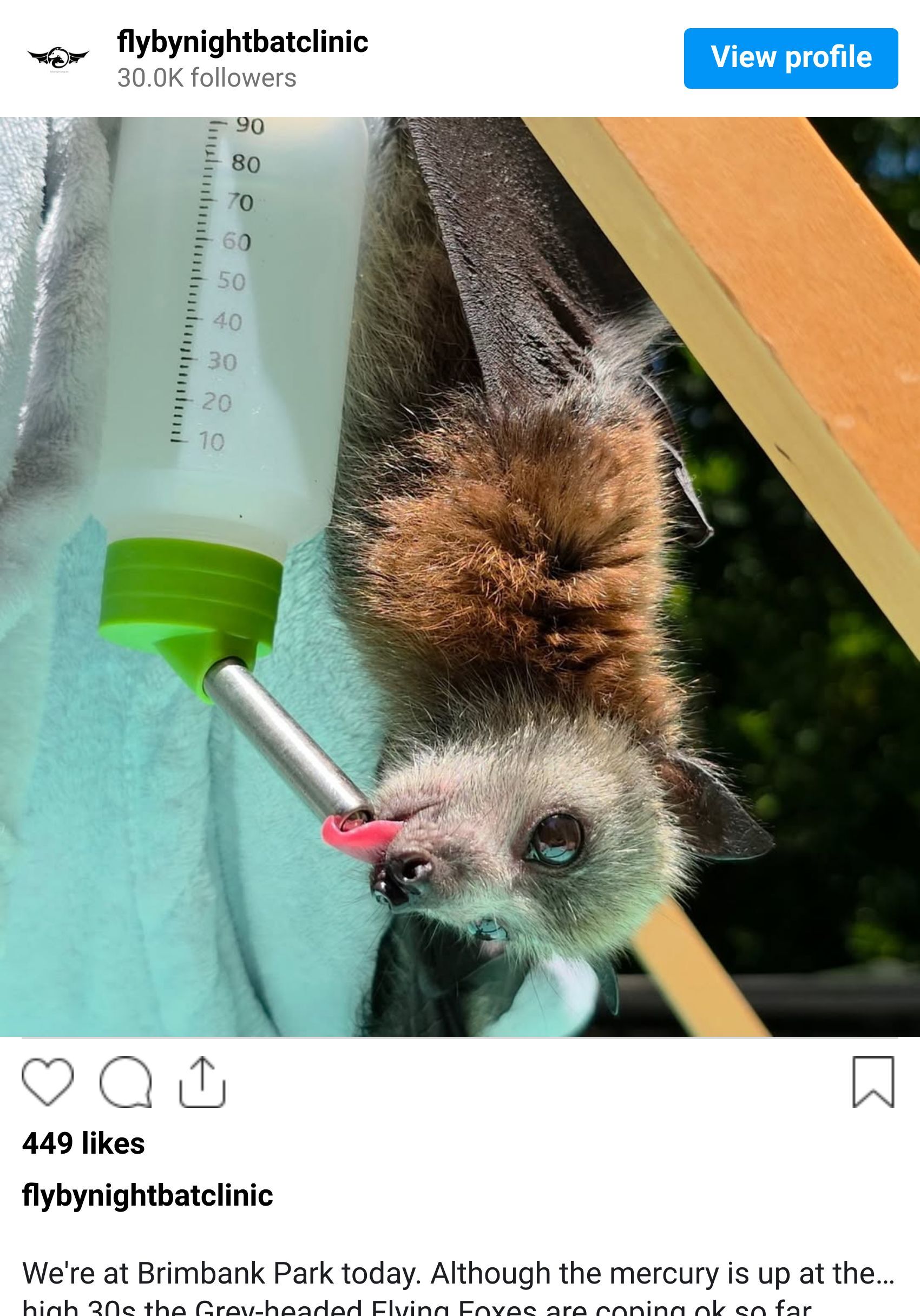
This was the scene that confronted Olinda husband and wife Tamsyn and Nathan Hogarth, who operate the Fly By Night Bat Clinic, a wildlife shelter currently caring for and rehabilitating about 76 bats.
For the Hogarths, seeing hundreds of grey-headed flying foxes die due to extreme heat exposure has become a regular occurrence since first launching the wildlife shelter back in early 2014.
In danger: According to the International Union for Conservation of Nature, the grey-headed flying fox – a type of fruit bat – is vulnerable to extinction. There's only about 300,000 remaining across Australia, including about 25 camps in Victorian places like Kew’s Yarra Bend Park, which often attracts flocks of 50,000 during the peak season.
No water, no refuge: On Tuesday, Tamsyn and a team of 27 volunteers spent hours at Brimbank Park, in Melbourne’s west, to spray water and care for flying foxes nearby, alongside Department of Energy, Environment and Climate Action staff members conducting high-pressure ground wetting.
Tamsyn said the bats were “dehydrated” and “delirious” as the mercury climbed, with the 45-degree peak not occurring until about 8pm.
🗣️“You've got them falling from the heat and smashing onto concrete next to you,” Tamsyn told the Eastern Melburnian. “It's all very depressing. You don't have time to process the emotional side of it as a person until later, you've just got to keep going to save who you can.”
Longer periods of heat: Victoria broke its record for the hottest temperature ever recorded on Tuesday, with Walpeup in the state’s north reaching 48.9 degrees.
Parts of Melbourne breached the 45-degree mark, while Melbourne Airport hit 44.1 degrees.
According to the Bureau of Meteorology’s 2025 preliminary summary, Australia experienced its fourth-warmest year on record last year, with temperatures 1.23 degrees above the 1961-1990 average.
The National Climate Risk Assessment, released last year, shows the number of extreme heat days in the country will increase from four to 18 days a year if no drastic action is taken to reduce carbon emissions.
What’s next? Tamsyn said she had been advocating for sprinklers to be installed at all Victorian camps for years, similar to the $180,000 custom-built system delivered by the State Government to Yarra Bend Park.
Beyond that, Tamsyn said there needed to be more education to shift people’s perception of the bats from pests to key pollinators – with the species acting as the key pollinator for eucalyptus trees.
🗣️“The community wouldn't want to see thousands of koalas die in a heat event but it seems to be okay for another species for it to happen to because people just don't have the same respect for them,” said Tamsyn. “Really naive people that refuse to learn still don't understand that they're actually really critical for our ecosystem.”
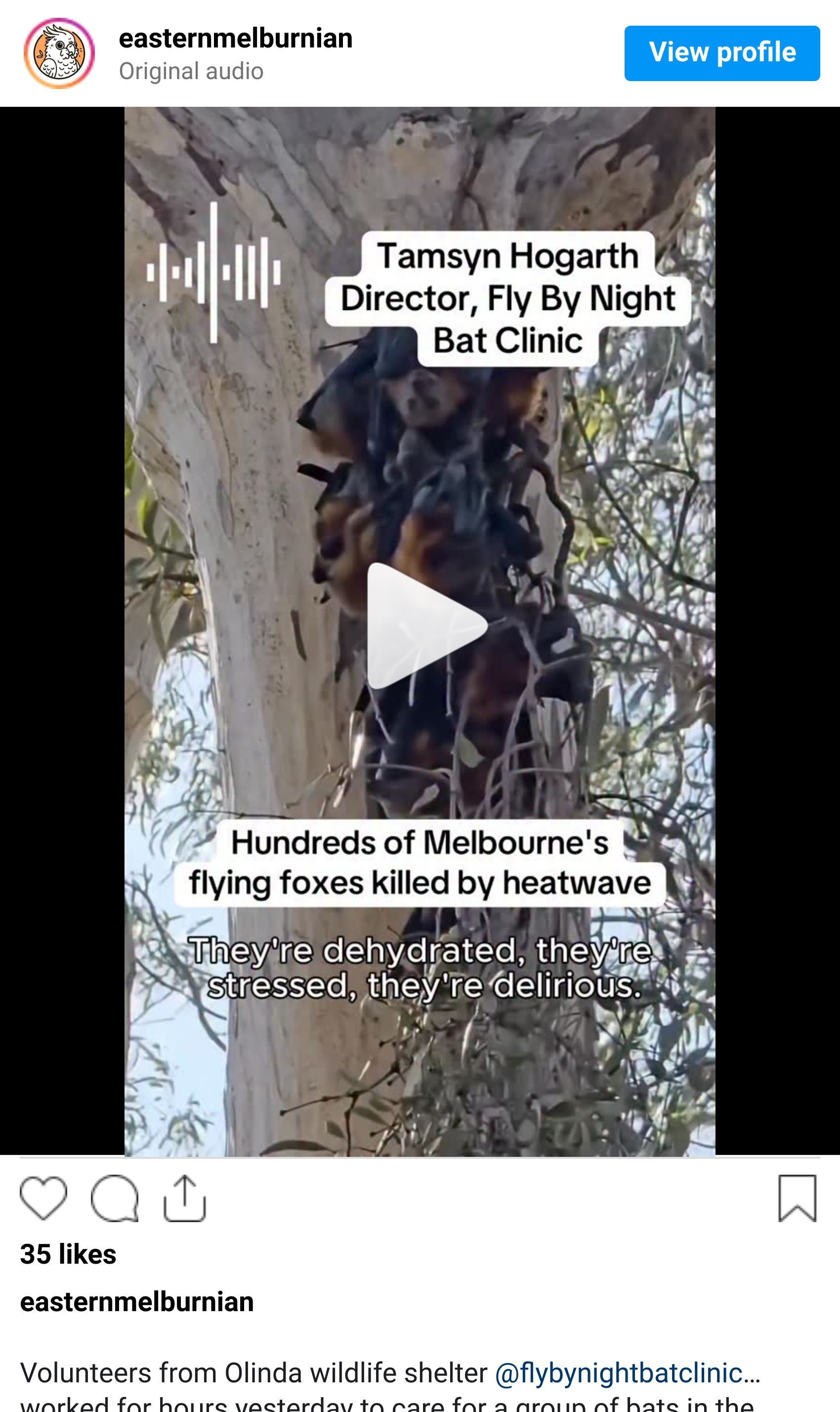
Image Credit: Andrew Mercer