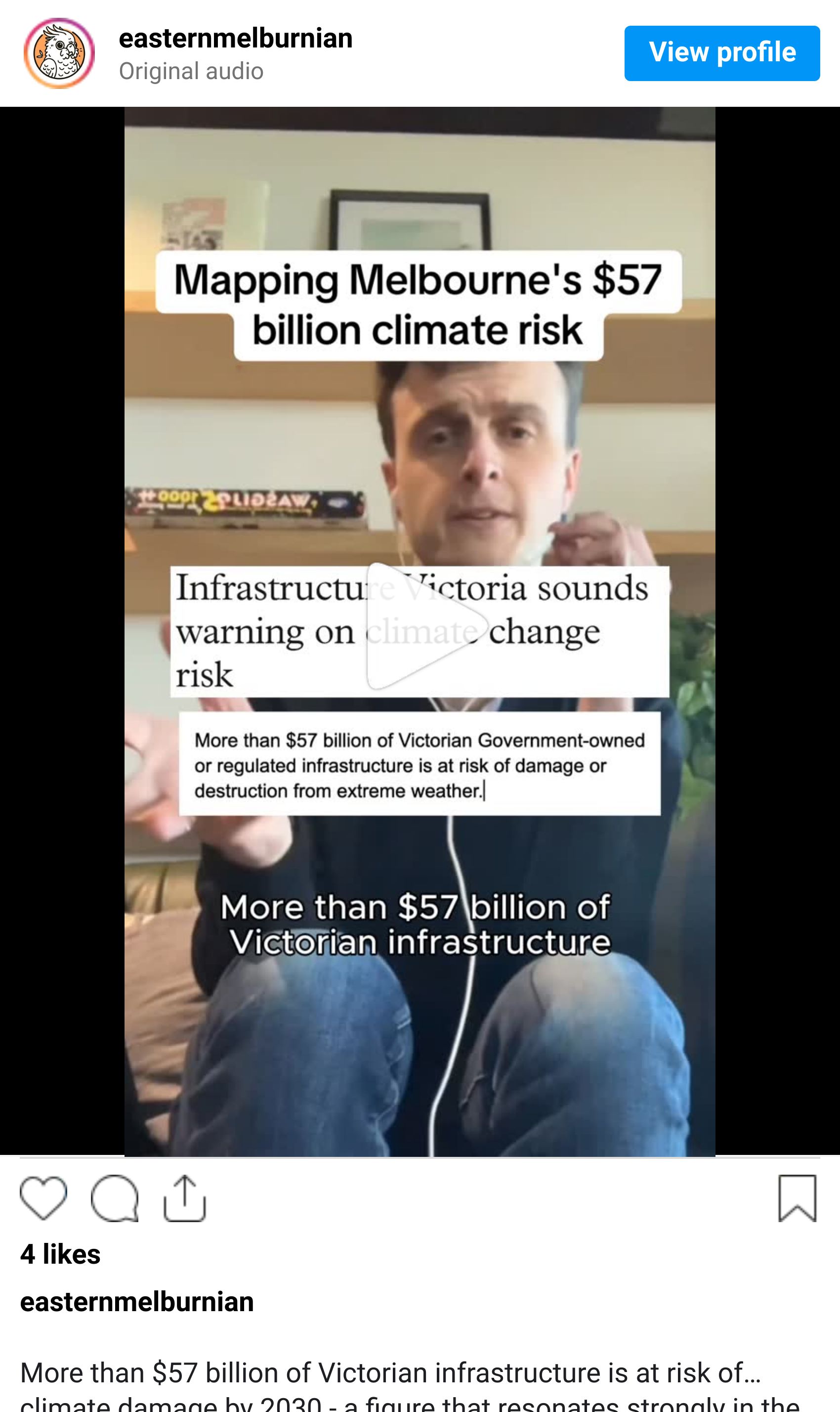

More than $57 billion of Victorian infrastructure is at risk of climate damage by 2030 — a figure that resonates strongly in the Dandenong Ranges, where residents are still recovering from repeated storm damage.
🍃 Region battered: Storms, landslides and bushfires are not rare for Dandenong Ranges residents, with a June 2021 storm event damaging 112 homes and leaving 81 uninhabitable.
Overhead power lines and telecommunications were cut off, while residents looking to flee were met with trees blocking or damaging roads.
Kalorama Mount Dandenong Country Fire Authority captain Bill Robinson remembered supporting residents after most powerlines were destroyed and roads blocked.
🗣️ “We were without power for three weeks,” Robinson told the Eastern Melburnian.
🧑🚒 High and dry: Robinson said it was “frustrating” to see minimal investment in climate-resilient infrastructure over the decades he had lived in the Hills.
🗣️ “We need Wi-Fi, better comms and standby generation power,” Robinson said. “It just seems illogical to have something in place that you have to keep rebuilding every time you have a major disaster. It should be bulletproof.”
💲 What’s the risk? In a new report, independent authority Infrastructure Victoria analysed the risk posed to $318 billion worth of State Government assets, finding roads, rail, energy and health networks the most vulnerable.
Under a “low emissions” scenario where global warming stays below two degrees Celsius compared to the 1951-1980 period, the study found more than $23 billion of existing infrastructure would be vulnerable to damage or destruction from bushfires by 2030.

Flooding and extreme heat also pose significant risks, with more than $22 billion exposed to flooding by 2030 and almost $11 billion to extreme heat.
💰 Risk vs reward: Roger Jones from Victoria University said investing in resilient infrastructure has often been politically difficult because success is defined by disasters being avoided altogether.
Jones, who currently works as a professorial research fellow at the university studying climate-related risk, said he believed the things outlined in the Infrastructure Victoria report may already be unfolding faster than official projections suggest.
🗣️ “My own opinion is that the level of exposure that they're talking about for 2030 is what we're exposed to now,” Jones said, adding he hoped state and federal governments would act quickly on the findings and deliver adaptation plans as soon as possible.
🗣️ “We’re not flying blind into the future,” he said. “There’s both a moral and, increasingly, a legal obligation to actually act on this kind of information.”
⏭️ What’s next? The State Government is due to release its next Adaptation Action Plan by October 31.
Infrastructure Victoria chief executive Dr Jonathan Spear said more needed to be done to update and fund climate adaptation action across the state.

Infrastructure Victoria chief executive Dr Jonathan Spear
🗣️ “We know extreme weather is a reality now,” Spear said.