
⏱️ The 136th edition of our newsletter is a seven-minute read.
Hi there 👋
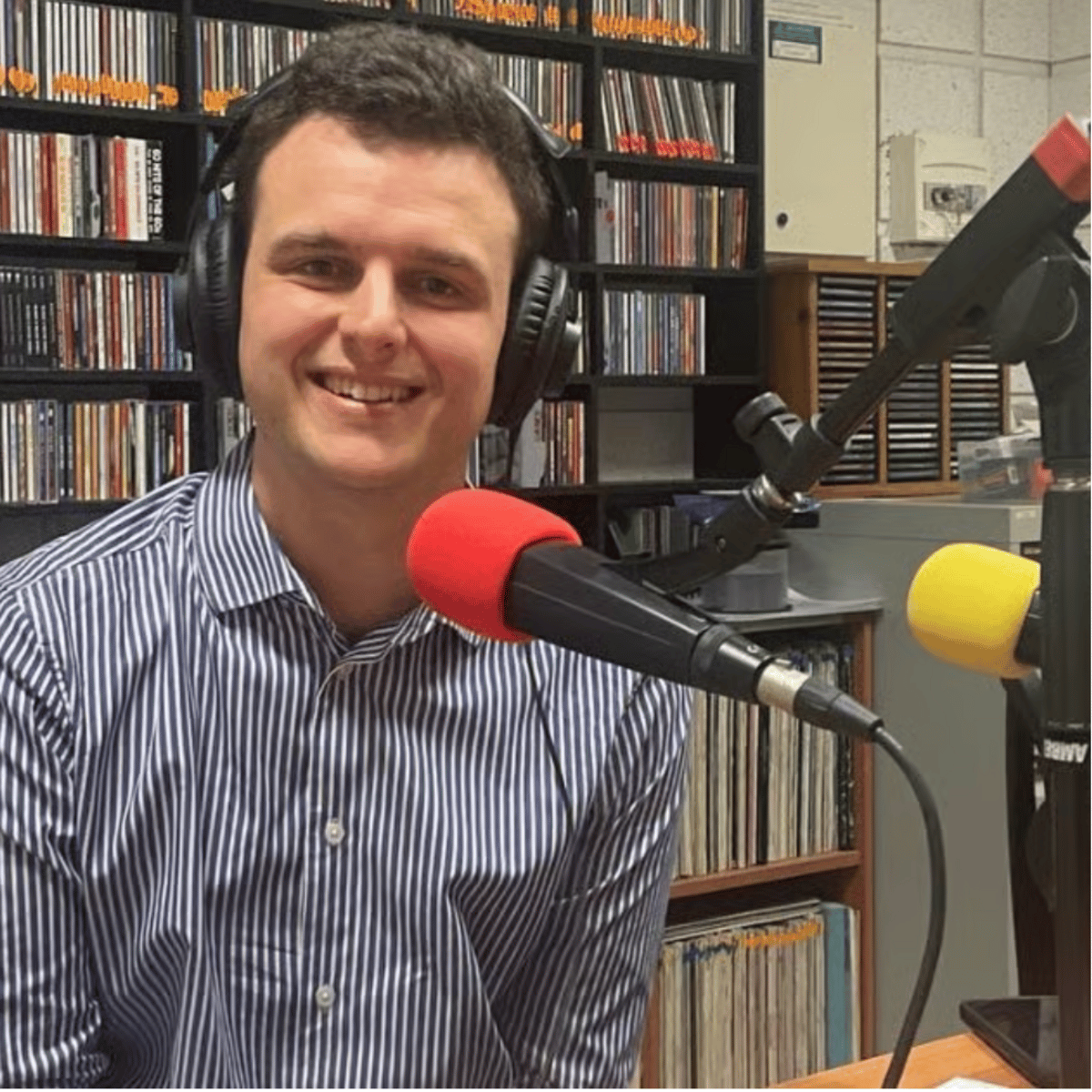
Matthew Sims here, your reporter at the Eastern Melburnian.
🛶 Bayswater is often teased for being a town with nothing to offer in terms of seaside views. However, from the 1930s to the early 1960s, the town had a lake for boating, swimming and diving.
🇩🇪 I took a dive myself into the archives to uncover the history of Waldheim — a “Swiss alpine village” — and the man behind it all, German migrant Hermann Busch. I spoke to his granddaughter, who kindly supplied photos and reminisced about her grandfather.
💌 If you know of any strange stories behind local landmarks or now-defunct attractions, please reach out to me via [email protected].
Today we’re also covering:
How far the Federal Government’s $3.8 billion investment towards the Suburban Rail Loop East project will go, and;
The renewed push for a shared bike and walking path connecting Hawthorn to Box Hill.
“There’s never been a better time. We’ve got more traffic on our roads than ever before. We’ve seen the State Government put eye-watering amounts of money into the North East Link and Suburban Rail Loop and a tiny amount into active transport.”
WHAT’S COMING UP 🎟️
FRIDAY 15/06/26, 8-9.50PM | Steve Kilbey
SATURDAY 16/06/26, 8PM | Rogue Traders
FRIDAY 22/05/26, 7.30PM | Lehmo – Camper Van Go
SUNDAY 24/05/26, 10AM-5PM | Japan Festival
SUNDAY 24/05/26, 4PM | False Morels
SATURDAY 30/05/26, 3-9PM & SUNDAY 31/05/26, 3-9PM | Unmarked Melbourne
SATURDAY 30/05/26, 8PM | The Choirboys
EVERY DAY TO SUNDAY 12/07/26, 10AM-5PM | Play School: Come and Play!

📰 THIS WEEK’S HEADLINES
The Federal Government announced in Tuesday night’s Budget that it will spend an additional $3.8 billion into the Suburban Rail Loop (SRL) East project, bringing its total investment to $6 billion.
SRL East is the first stage of the planned 90km underground rail line connecting Melbourne’s outer northeast and northwest.
Due for completion by 2035, the project will deliver six underground stations from Cheltenham to Box Hill via 26km of twin tunnels.
Tunnelling machines, currently being built, are slated to start boring later this year.
The project’s total budget is estimated at $30-34.5 billion, with the Federal Government expected to contribute a third of the funding.
The State Government has committed about $11.8 billion.
The balance is expected to be raised via a tax on development around the six new underground stations and further Federal Government funding.

A family-run “Swiss alpine village” in Bayswater built by a German migrant in the 1930s became one of Melbourne’s more eccentric tourist attractions, complete with a man-made dam.
Born in Hamburg in 1880, Hermann Otto Friedrich Busch migrated to Australia in 1912.
His early years in the country were shaped by World War I, when he was imprisoned at the Langwarrin Internment Camp as an “enemy alien”.
Busch married Richmond-born Dorothea Emilie Hennings in 1917, with the couple gifted more than four hectares on Mountain Highway in Bayswater in 1927 by her father.
A qualified house painter-decorator, Busch turned his attention to the property in the early 1930s, building what was described at the time as a “Swiss alpine village”.
Known as Waldheim Farm Guest House and Reception Centre, the property featured a tearoom, bungalows, wedding function rooms and a skittle alley – a European precursor to tenpin bowling.
The grounds became a local attraction after Busch built a concrete weir, thus creating a lake for boating, fishing, swimming and diving.
In a local historical publication, Brian St Alban Smith recalled Busch – often called “Poppa” – wearing embroidered lederhosen, a Tyrolean hat, woollen stockings and mountain boots.
“He smoked a fearsome meerschaum pipe with a pepper pot lid,” Smith said.
Busch’s granddaughter Margaret Imberger, who grew up at Waldheim alongside 10 other grandchildren, told the Eastern Melburnian on Monday that her grandfather was “very strict” and “no-nonsense”, recalling occasions where he fired warning shots to scare off boys near the boat shed.
Imberger said she and her siblings, nieces and nephews had to work across the property, including raking plums and milking cows.
After Busch died in 1960, the Dandenong Valley Authority destroyed the weir during channel works in the early 1960s.
Imberger’s parents continued operating the property until selling it in 1973.
The Palesviaki Enosis Club later used the site as a support hub for Greek-Australians from Lesvos.
The property at 26 Waldheim Road in Bayswater sold in March 2024 for $6.77 million.

Thousands of Whitehorse and Boroondara locals could benefit from a proposed shared cycling and walking path between Box Hill and Hawthorn that has been sitting in planning limbo for 30 years.
Advocates and experts say the plan is a safe way to ease congestion on our roads and public transport network, with Kooyong MP Dr Monique Ryan insisting there’s “never been a better time” to finally approve the project.
A 10-kilometre shared bicycle and walking path was first proposed in 1995 and would follow alongside the Lilydale rail line. One option proposed modifying the unused “ghost platform” at Box Hill station into a cycle path and bicycle parking space.
According to campaigners, delivering the project fully would be about $80 million, while a more conservative version is estimated at $35 million.
A petition calling for the State Government to provide funding for the design and construction of the trail has attracted more than 2,650 signatures.
The Boroondara Bicycle Users Group first proposed the idea in 1995.
In 2019, Box Hill MP Paul Hamer and former Hawthorn MP John Kennedy secured $370,000 for a feasibility study.
The State Government did not release the feasibility study report until Kooyong MP Dr Monique Ryan lodged a Freedom of Information request, leading to its release to her office in November 2023.
The study confirmed that the Hawthorn to Box Hill Trail would deliver significant benefits to the community and is feasible to build, but requires funding investment for design and construction works.
Local cycling advocate Peter Campbell said Boroondara was a “black hole” for safe cycling.
“Every person on a bike is one less person in a car,” Campbell told the Eastern Melburnian.
According to RMIT research, more than half of commuter’s trips to shops, schools and other destinations in most eastern Melbourne suburbs were less than five kilometres — about a 20-minute bike ride.
RMIT Associate Professor Lucy Gunn said better connections between cycling and public transport were essential.
“There is a lot of pressure on road space,” Gunn told the Eastern Melburnian. “We don’t want to just create more space on our roads, but instead make it more convenient for people to get around.”

👀 DID YOU SEE?
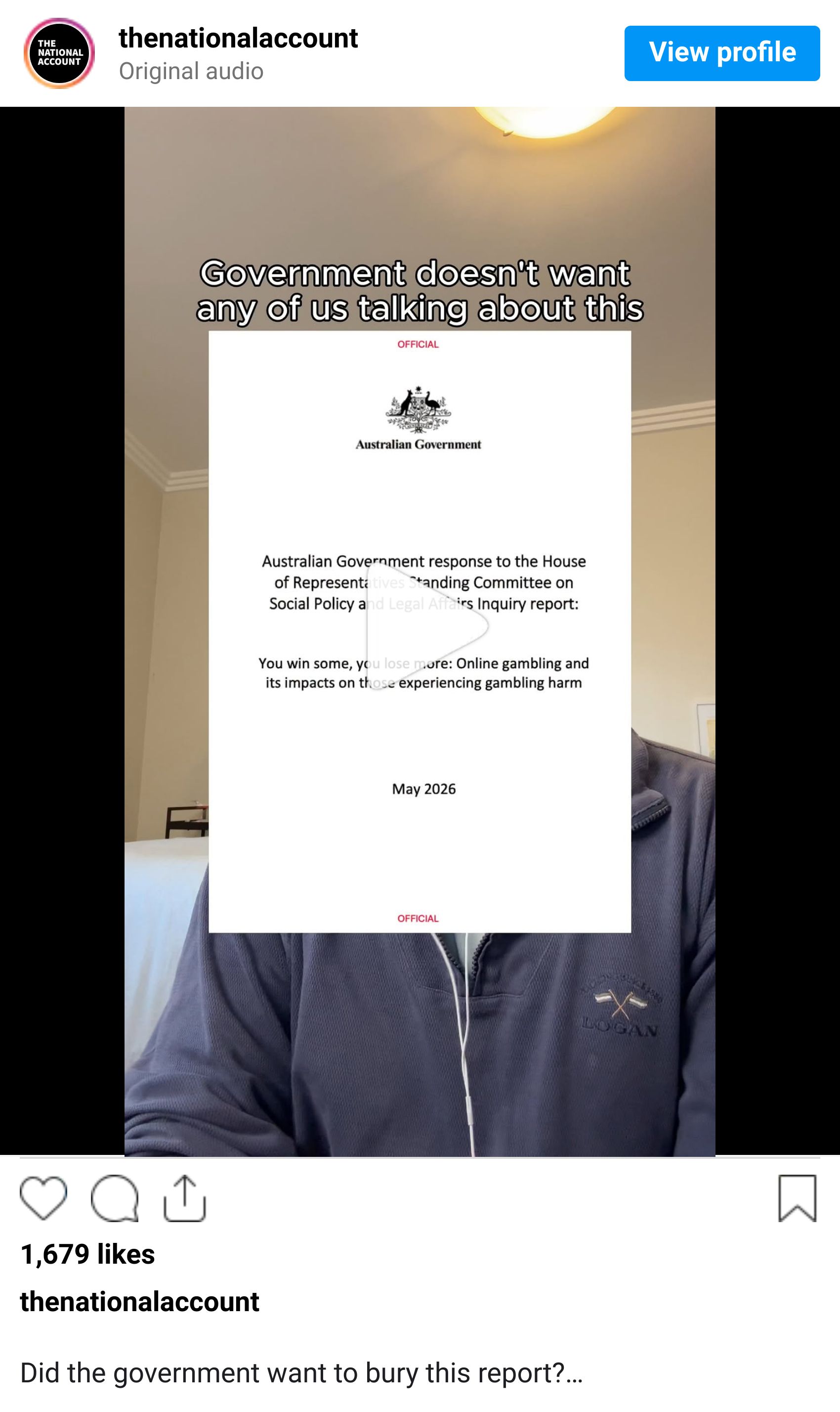
Gambling report buried
Perhaps hoping it would be lost in all the budget chat, the Federal Government quietly released its tardy response to the parliamentary inquiry into gambling a few hours before Treasurer Jim Chalmers made his speech.
They thought we wouldn’t notice. Archie Milligan from the National Account did. Check out his video below on the details.

Thanks for sticking around to the end of this Friday edition!
I’m researching a story on parking limits and fines in eastern Melbourne. If you’ve recently received or disputed a parking fine or have noticed how parking restrictions in your neighbourhood have recently increased, reach out via [email protected].
Cheers,
Matthew