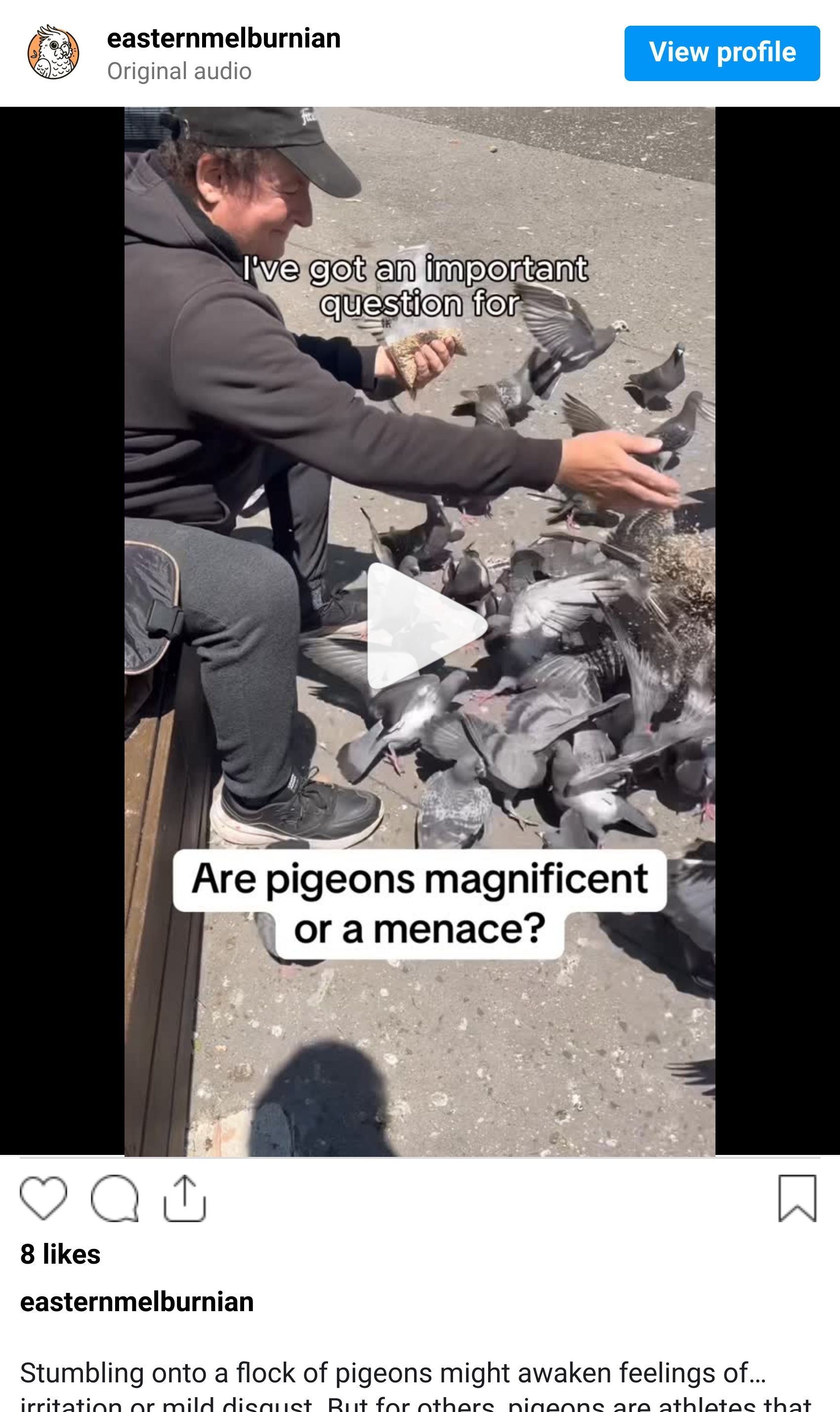

Stumbling on a group of pigeons might awaken feelings of irritation or mild disgust, but for 65-year-old Ferntree Gully breeder and racer – or “fancier” – Steve Brown, developing his flock has become a life-long passion.
He is one of about 400 enthusiasts across Melbourne hoping their pigeons are the fastest in the city. But dwindling interest is seeing numbers wane.
🐦 Avian athletes: Known as homing pigeons or racing pigeons, pigeons bred for racing are the result of hundreds of years of genetic selection.
The average race sees a flock of hundreds of pigeons return home from more than 450 kilometres away, often maintaining average speeds of 75 to 150 kilometres per hour.
The secretary of the Victorian Homing Association – which was first established in 1900 – Brown said he has been involved in the hobby since he was about five years old, attending the races in Mitcham with his father, with racing going back about 100 years to his great-great-grandfather.
🗣️“They can do magnificent speeds,” Brown told the Eastern Melburnian.

🥀 A dying art: Brown said his children were not interested in carrying on the torch, as were children from a number of other families associated with pigeon racing in the area.
🗣️“Most of the pigeon fanciers are actually just becoming older, and there's not as many kids taking it up,” said Brown.
🚫 Don’t feed the birds: Under Knox Council’s Amenity Local Law, an authorised officer is able to fine a person feeding a wild bird more than $4,000 if this results in the damage of property.
The council is not directly involved in managing pigeon populations - and discourages the feeding or handling of wild birds.

😡 A never-ending nuisance: The impacts of feral pigeons include the acidity of their feces corroding paint, stone and metal in public places, the potential transmission of disease and damage to other infrastructure such as air conditioning units.
Feral populations of pigeons often grow and congregate around major urban areas, including fast food restaurants and shopping centres, with Bayswater’s Mountain High Shopping Centre one of the many local hotspots.
Local Sheri Ashley-Griffiths said she often became angry when she saw people feeding them or killing them.
🗣️“I do see locals feeding them sadly,” Ashley-Griffiths told the Eastern Melburnian. “I have seen people reverse their cars over the top of and kill the pigeons sometimes.”