
⏱️ The 114th edition of our newsletter is a seven-minute read.
Hi there 👋
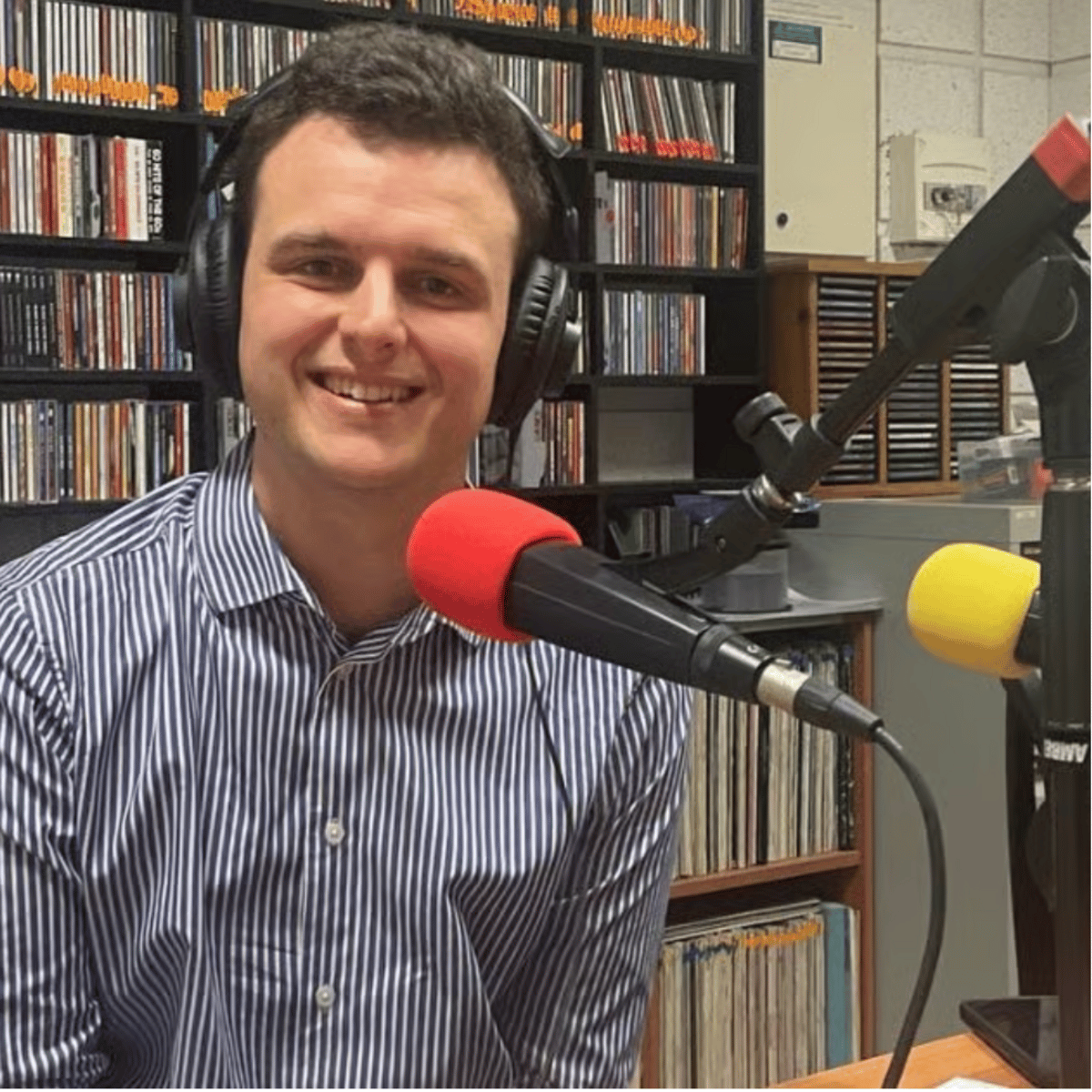
Matthew Sims here, your reporter at the Eastern Melburnian.
🗑️ Being a father to a toddler means you’re consistently dealing with mountains of cardboard — from boxes of Christmas and birthday gifts to the latest Ikea haul.
As you’d imagine, I’m a frequent visitor to the Whitehorse Recycling and Waste Centre to take advantage of free cardboard disposal.
But I’ve often looked at the other fees and been shocked by some of the high prices.
💰 I always knew the State Government’s landfill levy was a factor, but earlier this week, I learnt a bit more about how much it affects the waste charges for one council — Whitehorse.
Last week, the council approved a two-year extension to its landfill service contract. However, the highest cost wasn’t the contract itself but the extra tax on top, which is set to cost the council more than $65 million over the eight-year contract.
📞 I spoke with Whitehorse councillor Blair Barker, who said the tax was an unfair burden for the council and its ratepayers to cover, arguing an ordinary homeowner would probably decide to illegally dump rubbish rather than pay to visit a tip.
🤝 I know the majority of people want to do the right thing and, hopefully, councils and the State Government can work together to ensure waste gets to where it needs to go and how to cut down on waste creation altogether.
Elsewhere:
🔥 In the wake of recent heatwaves and bushfires hitting Melbourne and Victoria, I’m also looking into how the increasing risk is impacting local insurance coverage, with a recent report highlighting the Yarra Ranges LGA has been the worst hit due to being in a bushfire-prone area, with premiums increasing by 138 percent since 2020.
🏡 If you’re a homeowner within the Yarra Ranges region, particularly on Mount Dandenong, who has recently seen their insurance costs rise or recently had to make a claim due to bushfire damage — or any damage from a natural event — I’m keen to speak with you.
💌 Please reach out to me by simply replying to this email or contacting me via [email protected]
Finally:
Check out our ultimate lists of markets and date ideas across Melbourne’s eastern suburbs.
Today we’re covering:
How Whitehorse’s rubbish plans has to account for an additional $65 million landfill levy burden; and
How communities within Victoria’s bushfire belt are living with increased climate anxiety.
“To get away from bushfire, you need to go more urban, but to be able to afford a property, you need to go more rural.”
Kilysth resident Alyssa Wormald said living with bushfire risk was often the best available choice under the current economic circumstances.
WHAT’S ON THIS WEEK 🎟️
SATURDAY 14/02/26, 7.45-11PM | Bar and Burlesque
SATURDAY 14/02/26, 8PM | Pete Murray
SATURDAY 14/02/26, 4-8PM | Live at Warrawee
SATURDAY 14/02/26, 6.30-8.30PM | Chinese Lantern Celebration
SUNDAY 15/02/26, 7.30-10PM | Toni Childs
SUNDAY 15/02/26, 9AM-3PM | 100 Years of Gilwell Park
SUNDAY 15/02/26, 9AM-1.30PM | Yarra Valley Farmers Market

📰 THIS WEEK’S HEADLINES
Whitehorse Council has had to bite the bullet and renew its waste services contract for another two years despite it costing an additional $65 million over the eight-year life of the contract.
The State Government created its landfill levy in 2011, aiming to discourage the creation of waste which can only be sent to landfill.
Since it was first introduced in 2011, the cost of the State Government’s landfill levy has increased from $44 per tonne to $169.79 per tonne.
In 2021, Whitehorse Council signed a joint agreement with 11 other councils to enter into a four-year contract with landfill disposal companies to outline where the rubbish would go, followed by a two-year extension.
During its meeting last Monday, councillors approved a motion to extend the contract again – from April 2027 to March 2029.
The council has projected it will spend more than $94.5 million over the eight-year life of the contract – more than $65 million via the landfill levy and more than $29 million via the contract.
Whitehorse residents currently pay a standard charge of $263.25 for waste services.
Whitehorse councillor Blair Barker said he believed the landfill levy should be lessened and eventually scrapped as it incentivised people to dump their rubbish illegally and forced the council to pass costs onto ratepayers.
“$65 million would buy us a new swimming pool for Nunawading,” Barker told the Eastern Melburnian. “That’s a huge lick of money that’s being passed onto households.”
Kilsyth mother Alyssa Wormald can vividly recall the fear she felt looking at the “dome of flames” that engulfed the bushland through the Montrose region last March.
Starting at Montrose’s Dr Ken Leversha Reserve, the fire eventually tore through about 40 hectares, destroying one home and significantly damaging two others.
And for families living in Melbourne’s eastern bushfire fringe, like in the Dandenong Ranges, the fear of potential fire is no longer the rare event it once was.
The Dandenong Ranges has the highest bushfire risk in the Greater Melbourne region, with a greater than 50 percent chance of encountering weather that could support a significant wildfire.
Wormald says every whiff of smoke – or the news of an extreme heat warning – brings back feelings of fear. She says the country’s increasingly hot temperatures and changing climate set her up as a classic case for climate anxiety.
In eastern Melbourne, where many live among the native bush or at the foothills of the Dandenong, she’s not alone.
Of course, the impact of living around, or experiencing, a bushfire is not just mental.
Associate Professor and Doctors for the Environment Australia pollution spokesperson Vicki Kotsirilos AM said air pollutants like bushfire smoke can enter the bloodstream and impact almost every organ in the body, including the brain.
“There is no safe level of air pollution and the exposure to emissions…places adults and children at higher risk of premature death,” Kotsirilos told the Eastern Melburnian.
Having worked as a GP for almost 40 years, Kotsirilos said patients coming in with “climate anxiety”, especially younger patients, was “really common”.
“What I usually say to my patients when they come in feeling anxiety and relating it to climate is that we still have to cope,” said Kotsirilos. “There is actually a level of hope.”
Despite the risks, families continue to move into and remain in Melbourne’s lush eastern suburbs.
Wormald said life in the east can often be a matter of simple economics: “To get away from bushfire, you need to go more urban,” she said, “but to be able to afford a property, you need to go more rural.”
Raising a family in Kilsyth, Wormald’s two-year-old son was born prematurely and has had ongoing lung problems. It’s something she thinks about constantly when considering the impact fire – and the smoke it causes – might have on her loved ones.
But the way forward is not clear: “I don't know if my kids are going to be able to have kids,” she said, “because I don't know what sort of a planet is going to be around for them.
How can we hope? It’s easy to feel bombarded with images of natural disasters close to home or across the globe. A 2024 Climate Council study found more than three quarters of Australians were worried about climate change.
However, a number of steps, locally or otherwise, show positive results, including Monash Council becoming carbon neutral several years ahead of its original target and more than 30 percent of Victorian homes installing solar panels.
It’s these facts – the more local the better – that can demonstrate the small changes being made to adapt to a rapidly approaching future.
SEEN THIS WEEK 🤓
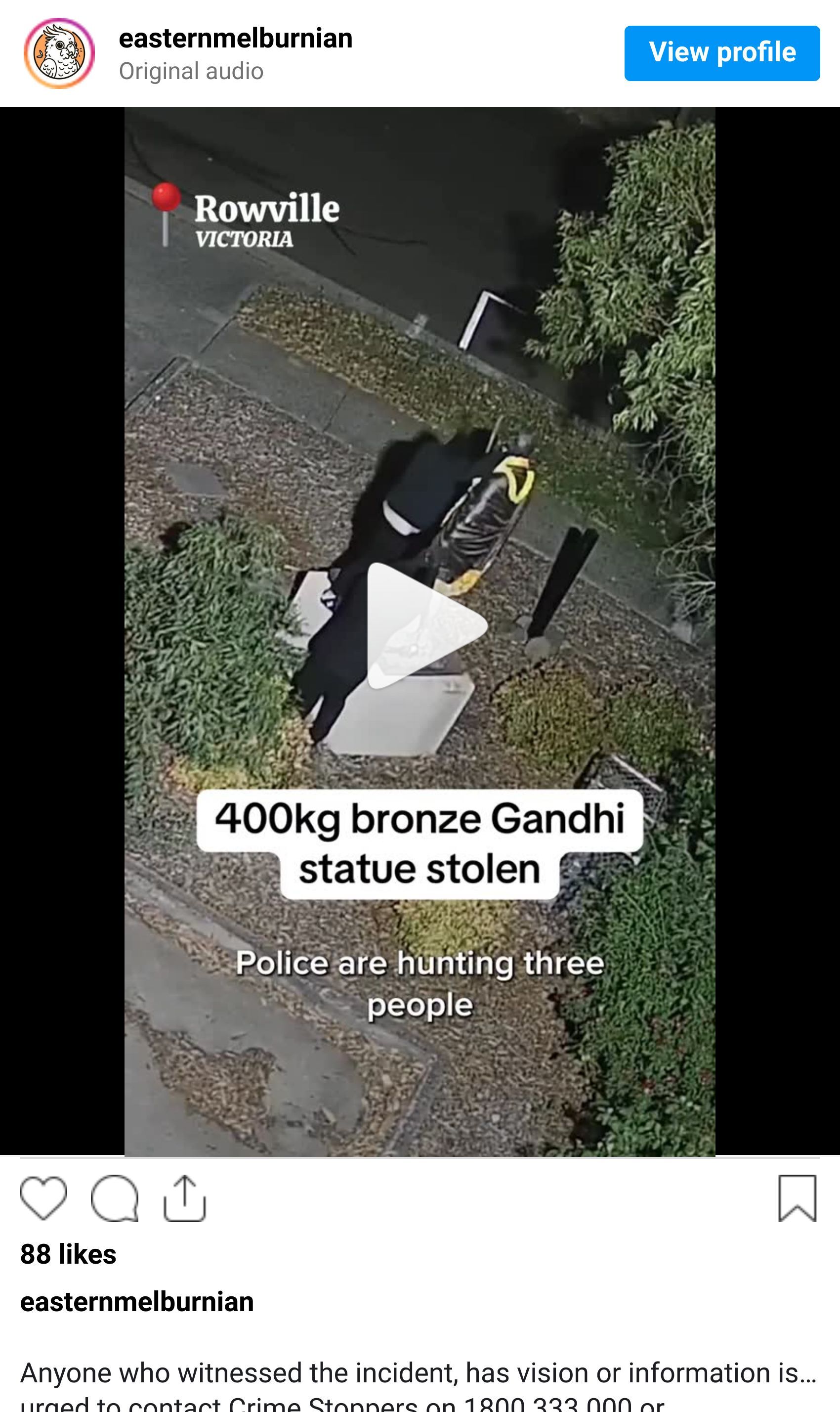
CCTV footage captures midnight statue theft
The Eastern Melburnian recently received footage showing the three unknown offenders police are seeking in relation to the alleged theft of a 400-kilogram bronze statue of Mahatma Gandhi from a charity centre last month.
Watch the video below.

Thanks for reading this mid-week newsletter and we’ll be back on Friday to shine a spotlight on the under-reported issues in our patch, so stay tuned.
Cheers,
Matthew