
⏱️ The 171st edition of our newsletter is a five-minute read.
Hi there 👋
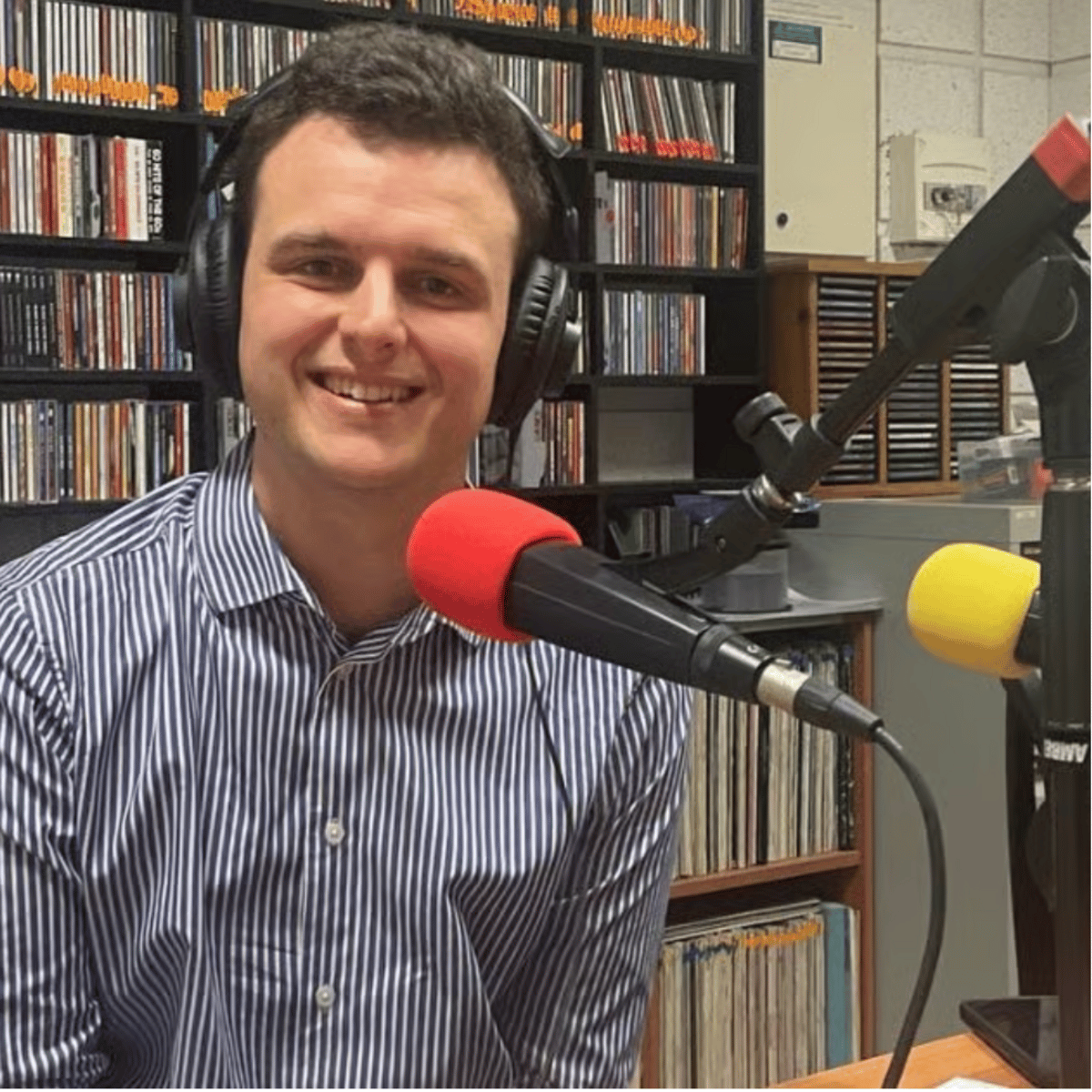
Matthew Sims here, your reporter at the Eastern Melburnian.
⛵️ With the sun starting to peek out more frequently as spring settles in, I put together a list of some of my favourite lakes to visit across the east.

“Technology is evolving quicker than governments can legislate for.”

WHAT’S ON COMING UP 🎟️
FRIDAY 18/09/26, 8:30-11PM | Liz Young with Kris Mizzi
SATURDAY 19/09/26, 11AM-1PM | Mont Albert Village’s Moon Festival Celebration
SATURDAY 19/09/26, 8-10:30PM | Cathy Dobson, Tim Ireland and Ian Green
SUNDAY 20/09/26, 10-10:50AM & 2-2:50PM | Mario the Maker Magician
SUNDAY 20/09/26, 6-7:15PM | Daniel Champagne
MONDAY 21/09/26, 10-11AM | Big Science, Big Fun
TUESDAY 22/09/26 TO SATURDAY 3/10/26 | WholeArt Ed Art & Craft Holiday Program
FRIDAY 25/09/26 TO SUNDAY 04/10/26, MIDDAY TO 9PM | Melbourne Country Show
TUESDAY 29/09/26, 11AM-NOON & 2-3PM | Mojo & Jimmy: The Totally Awesome Magic Show
RECENT HEADLINES 📰
On a hot day in Whitehorse, the concrete and metal skylines of Box Hill lock in heat while the mature trees lining Blackburn’s suburban streets create a shade from the harsh
The council is planting more than 3,000 trees a year, but local advocates and experts say the loss of mature trees on both public and private land means the council is fighting an uphill battle.
Whitehorse councillors endorsed a new Tree Management Policy on September 14, including guidelines for tree plantings and a goal to achieve canopy cover of 30 percent by 2050.
The policy includes guidelines such as requiring every house to have at least one tree planted within its nature strip and two new trees to be planted by council for every tree it removes.
RMIT’s Dr Thami Croeser said removing large mature trees and replacing them with saplings has already led to a “generational loss of cooling, amenity and habitat”, as saplings took 10 to 15 years to provide sufficient canopy coverage.
“It’s a massive downgrade, just like if you swapped a Lamborghini for a rusty ‘91 Honda Civic or knocked down a hospital and replaced it with a first aid shed,” he told the Eastern Melburnian.
According to a study of the changes in Melbourne’s tree canopy between 2014 and 2018, canopy coverage decreased in the eastern region by about 2.3 percent over a four year period.
In Burwood East, only 18.2 percent of land was covered by tree canopy in 2023.
In Whitehorse, total coverage jumped from 21.6 percent to 25.8 percent from 2018-2023.
Croeser said if the retention of trees did not keep up with removal, the net loss in canopy would increase the heat island effect exposure for “at least a decade or two”, increasing local temperatures by five to 10 degrees.
“A neighbourhood can lose about one percent of its mature trees annually, if it’s replacing them, without going backward on canopy overall,” Croeser said. “We really need to be planting the 200 small trees and protecting the 100 big ones.”
Blackburn and District Tree Preservation Society president David Morrison said he can notice a change in temperature driving into the centre of Blackburn from the shady suburban street, with Whitehorse and other nearby councils fighting against “a rapidly increasing loss of trees on private land”.
The Whitehorse area already experiences 11 days a year where temperatures exceed 35 degrees, with predictions estimating this would increase to 16 days per year, on average, by 2050.
The closest Bureau of Meteorology weather recording station in Viewbank found 2025 had 23 days above 35 degrees, the highest since records began in 1999.
On the corner of Jeffrey Street and Lake Road in Blackburn, there stands a single gum tree at about 18 metres tall.
However, Jeffrey Street Association secretary Simone Taylor said United Energy is arguing the tree is too close to unbundled power lines and needs to be removed.
“If that tree is removed, it would mean that the whole northern corner of Jeffrey Street would then be without its significant trees,” she told the Eastern Melburnian.
Urgent care clinics across Melbourne's east treated more than 91,000 patients last financial year, diverting some away from an emergency department (ED) visit or an ambulance drive and relieving stress on the city’s healthcare system.
However, local data shows patients are using urgent care clinics for different reasons: about three-quarters of patients at the Bayswater clinic said they would have otherwise gone to an ED or called an ambulance, compared to just 39 percent at Mount Waverley.
The state government launched urgent care clinics in September 2022, with longer operating hours providing fast medical treatment for urgent but not life-threatening conditions.
Local health networks deliver the service, with funding then largely sourced via the federal government.
You do not require an appointment, GP referral or Medicare card to attend. All consultations are bulk-billed.
According to the Eastern Melbourne Primary Health Network (EMPHN), the eight clinics across Melbourne’s east – Forest Hill, Lilydale, Mount Waverley, Maroondah (Bayswater), Monash (Clayton), Eltham, Epping and Heidelberg – treated 91,343 patients during the 2025-26 financial year – a 7.69 percent increase compared to the year prior.
The Bayswater clinic saw more than 14,000 presentations during the 2025-26 financial year, while Mount Waverley supported more than 12,600 patients over this period.
The Lilydale centre opened in December 2025, treating more than 4,500 people until the end of June.
Since its launch, 76 percent of patients visiting the Bayswater clinic reported they would have otherwise visited an ED or called an ambulance. About 39 percent of patients said the same at the Mount Waverley clinic.
The federal government is conducting an evaluation into the program, with an interim report estimating a 10.6 percent reduction in urgent-care equivalent ED presentations between April 2024 and March 2025.
Between June 30 2023 and August 10 2025, 44.6 percent of patients said they would have otherwise attended an ED.
A $10 million investment in the 2026-27 state budget supports the nine state-funded clinics, which includes Forest Hill and Monash.
The Victorian Labor government has also announced it is opening 12 new hospitals and upgrading facilities at 40 other centres, via a $31 billion investment into the state’s health system this year.
Victoria’s Liberal Party has not made any recent pledges to increase funding or the overall numbers of UCCs across the state.
Instead, the party has criticised the condition of major hospitals and committed more than $1.4 billion towards four upgrade projects across centres in West Gippsland, Rosebud, Mildura and Hamilton.
With warmer weather fast approaching, trips to local pools or parks will be back on the cards for eastern Melbourne.
However, an extra safety concern is now on the mind of local councils: cheap smart glasses being used to film people without their consent.
While Whitehorse, Boroondara, Monash and Knox acknowledged the growing potential for breaches of privacy through the technology, none have plans to follow other Victorian councils by introducing a specific ban.
Looking no different to a normal pair of spectacles or sunglasses at a quick glance, smart glasses allow the user to capture video or photographs, record audio or view notifications on an in-built screen.
While initial models like the Google Glass in 2013 didn’t catch on and were prohibitively expensive, a cheaper version from Meta, including video and audio features, dropped in June.
Kmart Australia released its “dupe” edition for $89 in late July, with stocks quickly selling out online and in store.
Yarra City Council passed a motion in early September to investigate banning smart glasses at council-managed leisure centres, childcare centres and playgrounds, with Bass Coast Shire Council approving a similar approach on Wednesday September 17.
A spokesperson for Boroondara City Council said it is not currently considering a ban on smart glasses, but would continue to keep an eye on advancements in technology and changes in privacy protections.
“We do not directly operate leisure centres, childcare or kindergarten services, so any decisions in those settings would be a matter for the relevant provider,” the spokesperson said. “In public places like playgrounds, any restrictions would be difficult to monitor and enforce.”
A spokesperson for Whitehorse City Council said policies and conditions of entry are already in place across its facilities to manage photography and filming.
“The use of smart glasses may fall within these existing arrangements, depending on how they are being used,” the spokesperson said. “Council may consider whether any further investigation or measures are required in the future.
A spokesperson for Knox City Council said while it was aware of discussions on restrictions across other councils, no decision to look into its options had yet been made.

✍️ EASTERN MELBOURNE QUIZ ANSWERS
Here’s the answers to the test on the east’s localities.
Question 1: What is the name of the locality and shopping hub next to Ferntree Gully? (Hint: It rhymes with Narre Warren’s main shopping centre)
A: Mountain Gate
Question 2: Which sub-locality of Burwood East shares its name with a traditional hunting cry?
A: Tally Ho
Question 3: What is the name of the Yarra Ranges locality which includes a forest which houses the tallest flowering plant in the world?
A: Sherbrooke
Question 4: Which locality in the outer north-east sounds festive, but actually is named after an freed convict and shepherd?
A: Christmas Hills
Question 5: What is the name of the Boroondara locality that shares its name with a road running from Station Street in Box Hill South to Power Street in Hawthorn?
A: Riversdale

🔎 If you haven’t already, go check out the deep dive from the National Account’s Archie Milligan into the practice of memetic warfare — or using memes and targeted content to influence the public.
Cheers,
Matthew