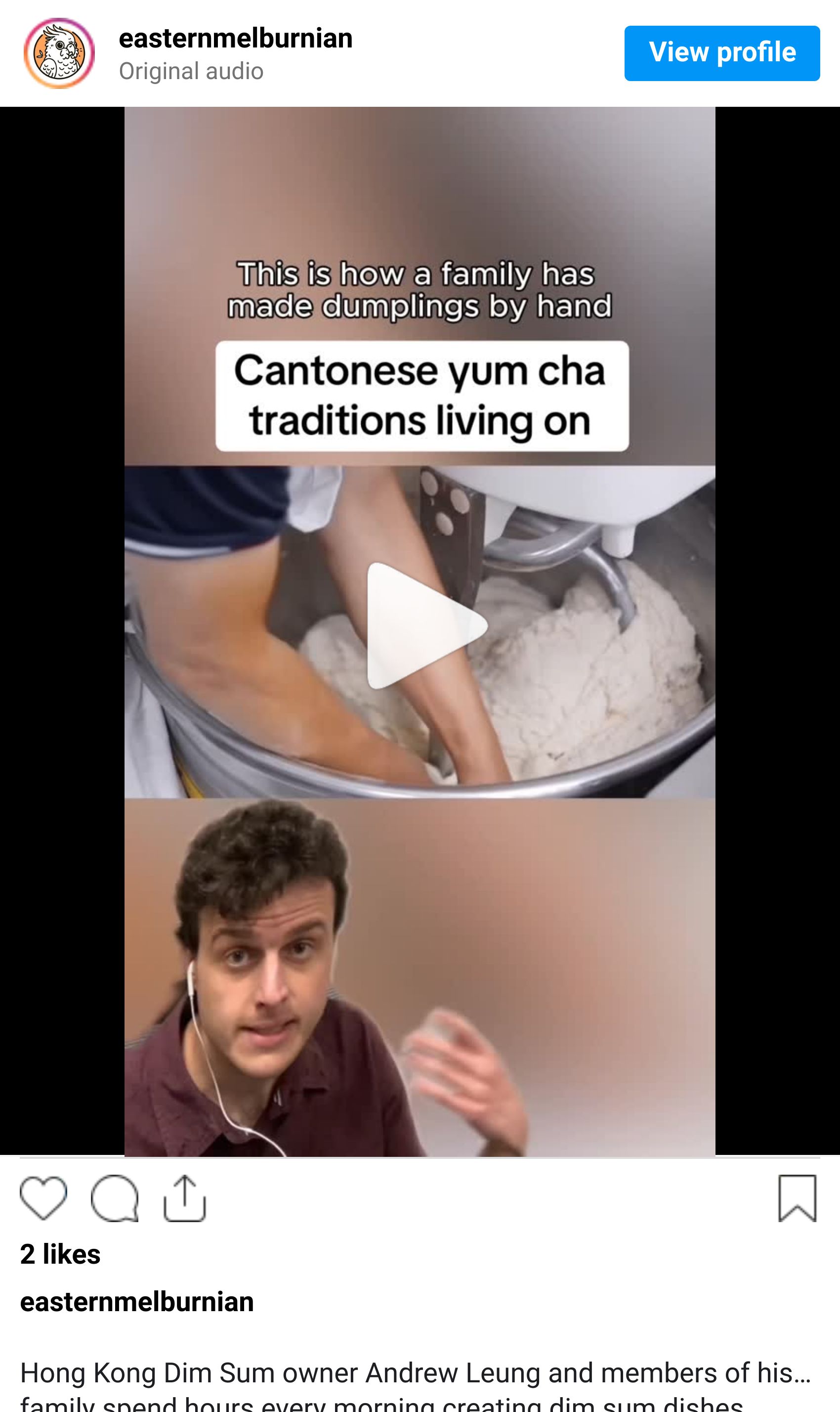

Hong Kong Dim Sum owner Andrew Leung and members of his family spend hours every morning making dim sum dishes, using techniques his father brought from Hong Kong in 1982.
With competitors switching to frozen and machine-made alternatives, the business is one of a handful of eastern Melbourne restaurants passing down time-honoured skills.
“With the aging population and retirement of many of the master chefs, the art is a dying art in Melbourne,” said Leung. “We already know of many businesses who buy frozen dim sum from overseas.”
🥡 What is yum cha? Literally meaning “drink tea”, yum cha is the Cantonese tradition of brunch of Chinese tea and small plates of food known as dim sum.
In Melbourne, the social-first approach to dining became popular in the early 80s, taking hold of the Chinatown district.

🧑🧑🧒🧒 Family heritage: Kong Choi Leung, Andrew’s father, has been making dim sum since 1964, learning the craft across a number of Hong Kong tea houses.
Kong travelled to Melbourne in 1982 as part of a skilled migration program and has jumped from job to job within the area’s food industry over the decades, before opening up his own shop in Box Hill in 2000.
🗣️ “I wanted to bring my culture to my community,” Kong told the Eastern Melburnian.
📈 Growing and moving: There are currently two Hong Kong Dim Sum locations in Glen Waverley and Doncaster, with their Box Hill store closing in 2024.

Kong has handed over the reins of the business to Andrew, who grew up surrounded by dim sum and yum cha.
🗣️ “Yum Cha is certainly a multigenerational family affair where three generations or more would eat at the same table,” Andrew told the Eastern Melburnian. “I do find with modern lifestyles, this is becoming a rarity and fitting big family lunches into the calendar is less of a priority which is sad.”
👀 Looking back, moving forward: Andrew said the business aimed to maintain its traditional methods, including cooking from the same recipes his dad wrote down in 2001, using a bamboo steamer imported from China and making everything by hand.
🗣️ “On weekends and some weeknights, I would be in the kitchen with mum and my brothers helping my dad package steamed bao,” said Andrew. “Our approach has not changed – same recipes, same ingredients, same prep methods for the last 25 years.”