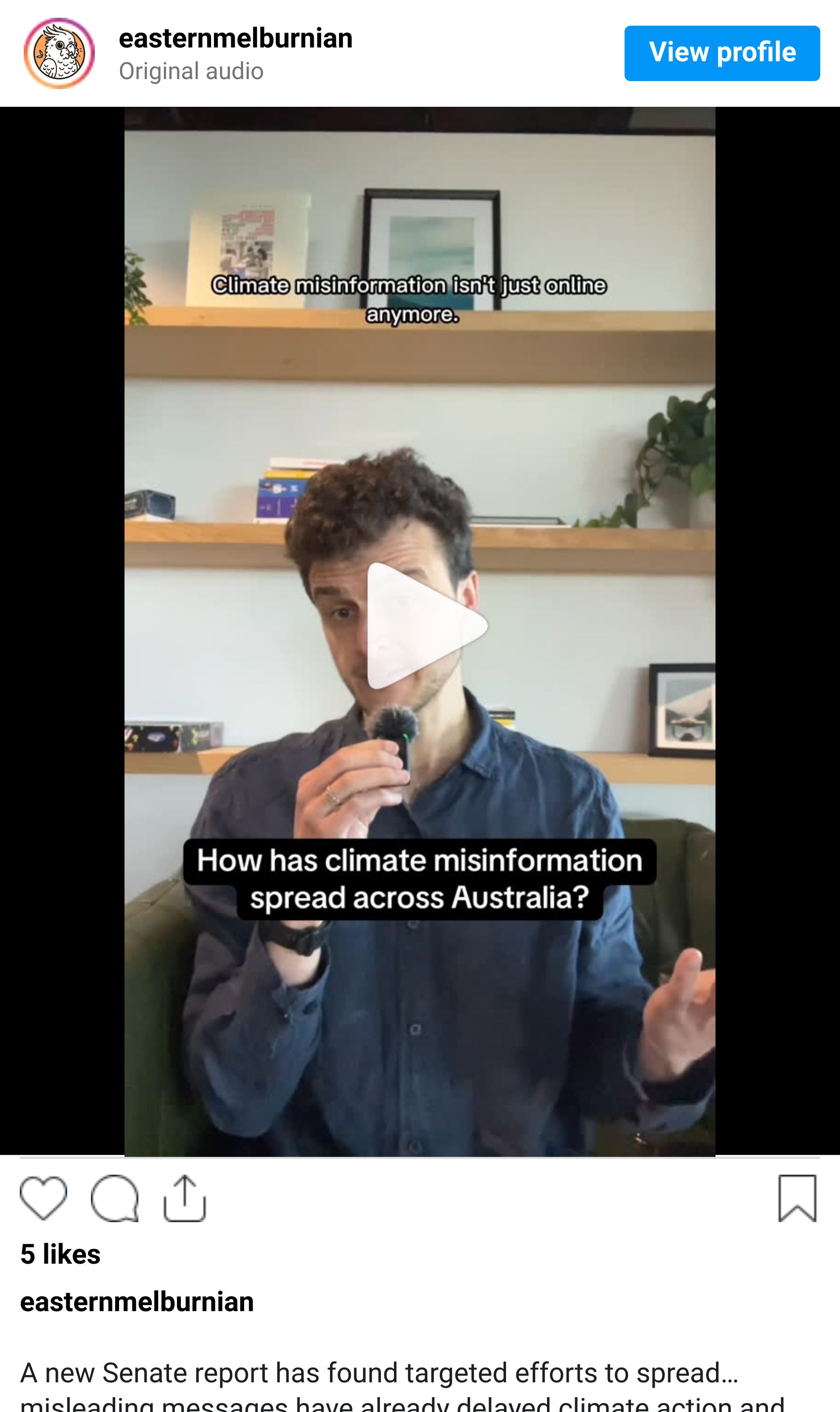

False claims about climate change and renewable energy were once most common on the fringes of the internet.
However, a new Senate report has found targeted efforts to spread misleading messages have already delayed climate action and fuelled fear in Australia, particularly local communities, with experts in Melbourne’s east warning public health is at risk.
❓ What happened? A parliamentary inquiry - backed by Labor, the Liberals, the Greens and Independent senator David Pocock - has found there are coordinated misinformation campaigns actively working to mislead Australians. Their aim is to delay action to reduce climate pollution, erode trust and inflame community conflict.

😷 Health impacts: Dr Cara Platts from Doctors for the Environment Australia (DEA) was one of the authors of DEA’s submission to the inquiry.
She said climate misinformation was an “urgent threat to public health because false information about climate change delays action”.
🗣️ “We've had the 11 hottest years on record in the previous 11 years – those numbers have real world impacts: increased heat days, increased mortality and higher burdens on our hospital systems,” Platts told the Eastern Melburnian.
🔥 Fuelling the fire: She pointed to the gas industry’s funding of campaigns to promote the use of natural gas as an example of disinformation leading people to make unhealthy decisions.
“Our most recent peer-reviewed evidence shows that gas appliances in homes increase indoor air pollution, particularly affecting children’s respiratory health and asthma rates,” said Platts.
🎯 Many targets: DEA supported a multi-pronged approach, including legislation, litigation, collective action and education.
🗣️ “Piecemeal or voluntary industry regulation is insufficient,” said Platts.

😨 Generating fear and anxiety: According to a News and Media Research Centre (NMRC) survey from 2025, concern about misinformation in Australia is high (74%) and is the highest globally. The National Director of RE-Alliance, Andrew Bray, also submitted evidence to the inquiry.
Speaking with the Gippsland Monitor, he said “one of the biggest contributors to community anxiety [was] not being able to access easy, factual, locally relevant and trusted information”.
🗣️ “When there's an information void, we just see it filled time and time again by false and exaggerated claims,” said Bray.
🛑 Facing falsehoods head-on: Lighter Footprints is a local volunteer-run climate action group based in Melbourne's inner-east, covering the areas of Boroondara, Stonnington, Whitehorse and Monash.
Group convenor Jenny Smithers said the group was concerned with how misinformation or disinformation can fester in the minds of people sitting on the fence.
🗣️ “Once people have got ideas implanted in their mind, it's quite hard to shift them or to get them to open their mind to other possibilities,” said Smithers. “We’ve just got to reach that tipping point where momentum pushes back against the misinformation. We're asleep at the wheel when we've got this huge opportunity to have such a productive and bright future.”
What’s the difference? Disinformation is false or misleading information that is created and spread deliberately to deceive or influence an audience, while misinformation is false or inaccurate information spread without this malicious intent.
How do they do it? The report described a recurring “climate obstruction” playbook used to delay action on energy transition in Australia and overseas:
Shift the argument from denying climate science to questioning whether solutions (like renewables) work;
Amplify costs and risks, often using selective or misleading data;
Promote local impacts and fears, sometimes exaggerating real concerns;
Use “astroturfing” - campaigns presented as grassroots but backed by organised interests;
Undermine trust in scientists, institutions and expertise; and
Spread rapidly online, where platforms amplify polarising or misleading content.
The common outcome? Slowing projects and driving down policy and public support for the energy transition.