For years, Canterbury couple Glenn Ryan and Nardia Papas were frustrated by the dying grass on their nature strip.
But three years after planting native vegetation, they say it has improved both the streetscape and their connection with neighbours and passersby.
They are among a growing number of eastern Melbourne residents replacing grass with native plants to support biodiversity, pollination and cooling.
🥵 A changing environment: Across metropolitan Melbourne, the east has the highest urban tree canopy cover at 25.9 percent. Street trees and nature strips make up about 15.7 percent of this.
Climate projections suggest that by 2055, the region’s average annual temperature will rise by 0.8 to 1.5°C, while rainfall will fall by 5.1 to 7.5 percent.
A University of Melbourne study found that a five percent loss in tree cover can increase air temperatures by one to two degrees.
Ground work: Ryan and Papas began planting Indigenous species in late 2022. Papas said the plants required little maintenance.
“Often through summer, the grass would die, whereas the plants have really thrived there,” Papas told the Eastern Melburnian.

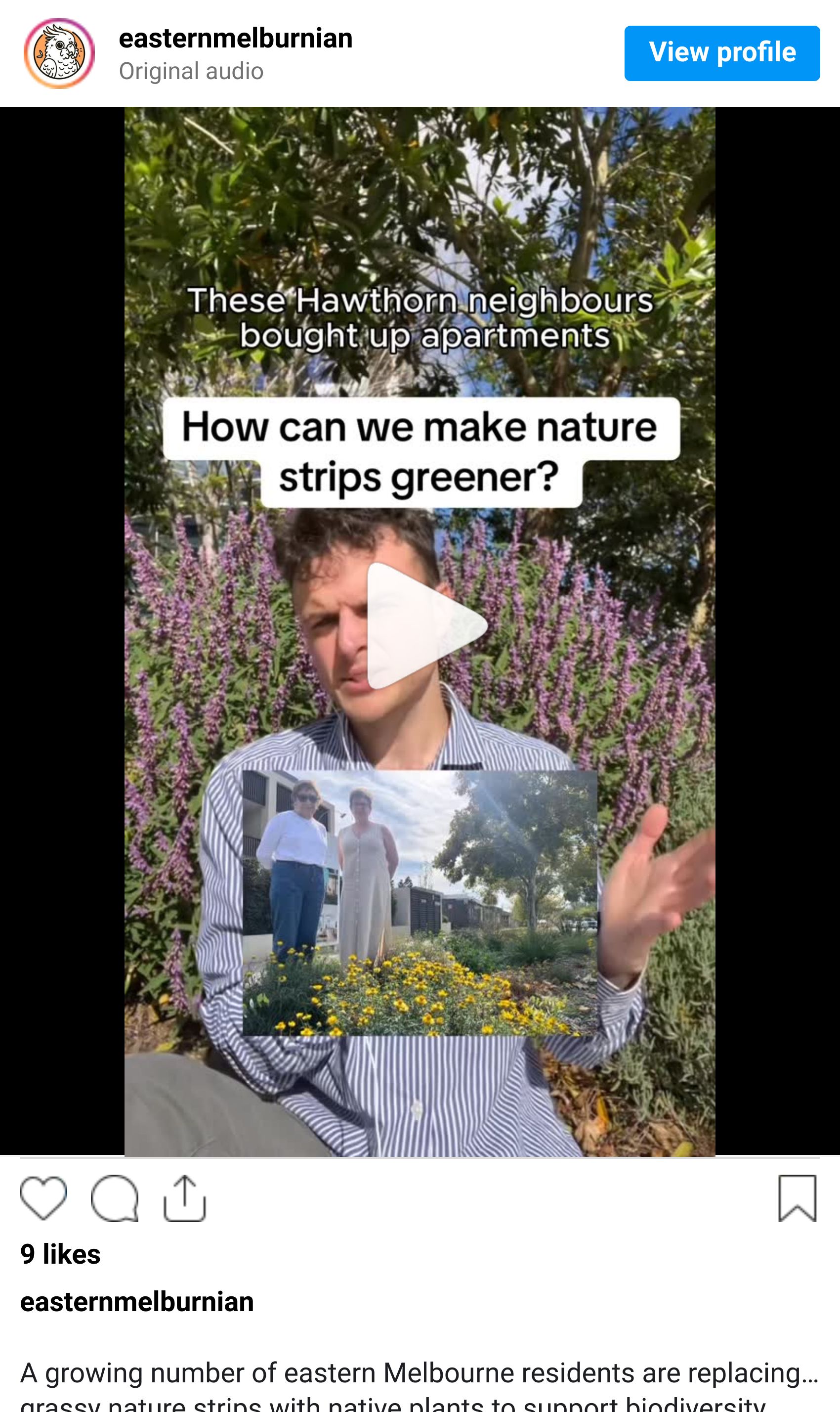
❤️ A source of pride: In Hawthorn, residents of an Auburn Road apartment block faced a similar problem. When the building was completed, the nature strip was left as gravel.
Residents Deborah Isherwood and Jill Walker were among those who worked to restore the kerb, replacing gravel with native plants, mulch and ground cover around an existing tree.
🗣️ “There was no grass left, not even weeds would grow,” Isherwood told the Eastern Melburnian. “It adds instant appeal to where you live.”
Walker said the changes would also improve conditions for the tree by replacing bare gravel with vegetation.
😎 Cooling down: Monash University Emeritus Professor Nigel Tapper said greener nature strips could help reduce urban heat.
🗣️ “The more the green cover, the lower the heat,” Tapper told the Eastern Melburnian. “You could quite easily achieve two or three degrees of air temperature cooling on a heat wave day.”

📏 Garden guidelines: Nature strips are managed by local councils, which generally aim to retain them as green space while allowing access for utilities.
Boroondara Council recently updated its guidelines, recommending permits for residents who want to plant native groundcovers and small shrubs to create habitat for birds, insects and lizards.
Monash Council runs a Nature Strip Planting Project, offering approved residents 50 free Indigenous seedlings and a $50 garden centre voucher.