
⏱️ The 158th edition of our newsletter is a five-minute read.
Hi there 👋
Matthew Sims here, your reporter at the Eastern Melburnian.
⌛️ With about four months left before Victoria knows who will lead them for the next four years, we wanted to take things down to the local level.
📍 So, we’re giving you the lay of the land early, and zooming in on who is seeking your vote and what they stand for.
🗓️ Including key dates, information on how to enrol and how voting works, our ultimate guide will be updated with new candidates and links to related coverage regularly.

If you think something is missing or you want me to get candidates to respond to a key issue, let me know by email: [email protected]
✍️ Researching, writing and editing stories like these is time consuming. If you'd like to support our work, please jump on the link below.

Click this banner to donate!
Today, we’re covering:
Who is campaigning for your votes in the upcoming state election;
Croydon’s community radio station and its push to keep younger people listening;
One of Victoria’s last pipe organ makers;
A pub-themed trivia test; and
The history of Bayswater’s playground locomotive.
“New instruments aren't being made, it's more restorations these days,”
WHAT’S COMING UP 🎟️
THURSDAY 06/08/26 TO SATURDAY 08/08/26 | Anne of Green Gables
THURSDAY 06/08/26 TO SATURDAY 29/08/26 | Treasure Island
FRIDAY 07/08/26, 7:30-8:40PM | Tell Mama! Karise Eden Sings Janis Joplin
FRIDAY 07/08/26, 8-10:30PM | Things of Stone and Wood
FRIDAY 14/08/26, 8:30-11PM | Dave Hole and Geoff Achison
SATURDAY 15/08/26, 9AM-5:30PM | Victorian State Jigsaw Puzzle Competition
SUNDAY 16/08/26, 6:30PM | The Bennies

📰 THIS WEEK’S HEADLINES
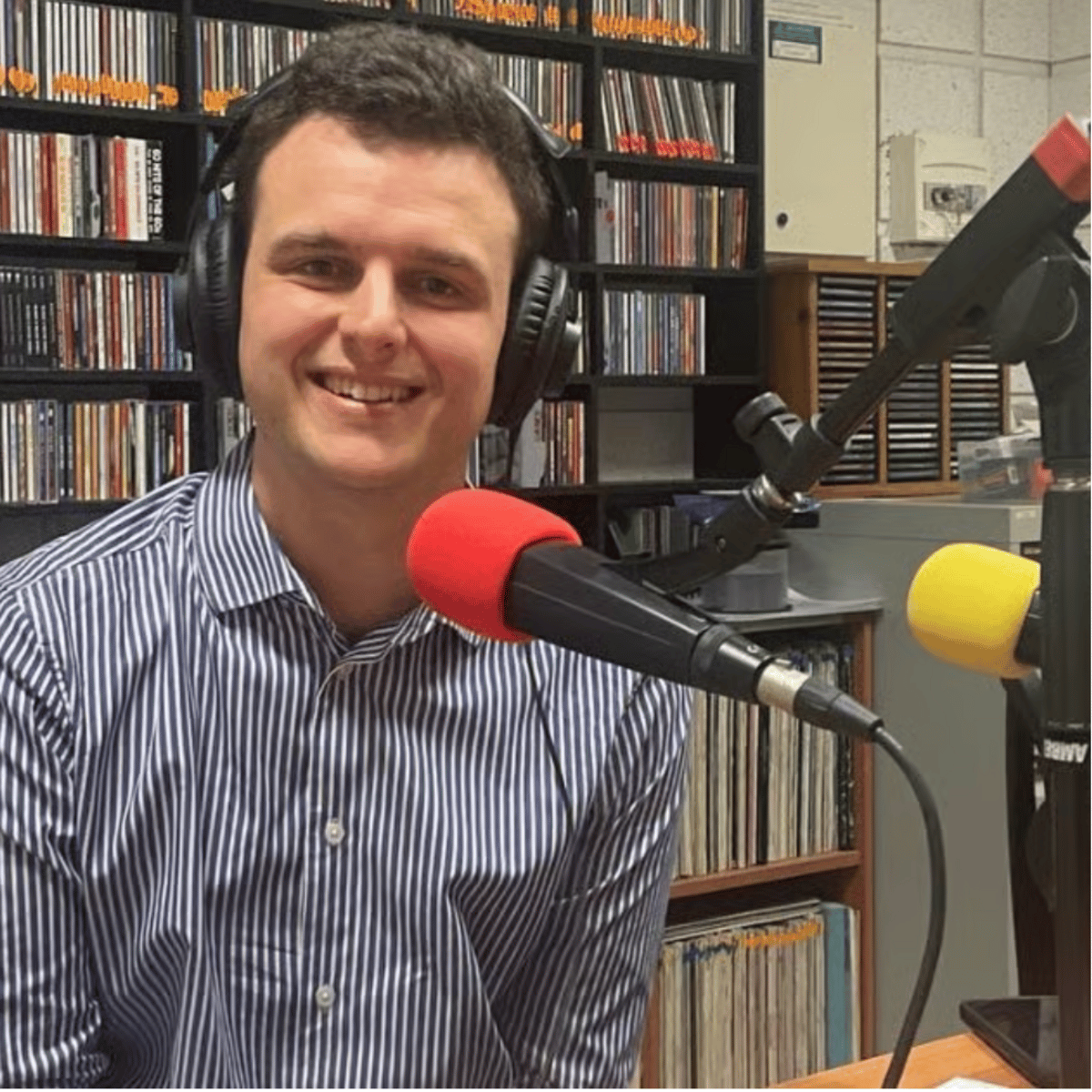
In July 2003, Radio Eastern FM’s two main studios at Croydon’s Wyreena Community Arts Centre were destroyed by fire in the early hours of the morning.
However, the volunteers were committed to return to the air as soon as possible, broadcasting from a third spare studio next door at 5pm that evening.
Now, 23 years on, the community radio station is still on the air. But changing tastes, the popularity of radio and tighter budgets are placing more pressure on this volunteer-run organisation.
Forming under the name Eastern Community Broadcasters in 1974, the station only transmitted test broadcasts before receiving a community broadcasting license in late 1990, moving to full-time broadcasts in February 1991.
Secretary Tony Kenyon said about 80 active volunteers offer their support, including 42 on-air presenters.
“We're all volunteers, from the president down to the office people,” he told the Eastern Melburnian. “Nobody gets a dollar in payment of any kind. In some cases, this is all they have.”
Lyn Woods, the station’s vice president, has been a volunteer for the past 20 years. She said one of the most significant differences between commercial and community radio was the “wide mix of music”, from her jazz program to punk, world music and even electronica.
“On commercial radio these days, you’ll hear the same track every day,” she told the Eastern Melburnian. “We’re using our own collections and we're not told what to play.”
The majority of the station’s funding is sourced via membership fees and sponsorships, with some support from grant programs.
While the station has more than 300 members supporting them, Kenyon said falling membership numbers were a concern.
“Members are not joining at the rate that they're falling off and sponsorship is difficult at the moment because money is tight,” he said.

Jeremy Smith is one of the last pipe organ makers left in Australia and he knows his entire career depends on the popularity of traditional organ playing at church.
The eastern suburbs local is currently restoring an organ built in 1874 for use at St Dominic's Catholic Church's in Camberwell — one of about 100 organs he manages across Victoria, Tasmania and South Australia — in a trade that has shrunk as church attendance and funding have dwindled.
Born in Launceston, Smith began playing piano at five before discovering the organ at 15.
“I just liked the sound of the organ … I fell in love with it,” he told the Eastern Melburnian. “A lot of the time, it doesn't feel like work.”
Smith first moved to Melbourne in 1992 as an apprentice with Australian Pipe Organs before joining Wakeley Pipe Organs in 2012 and then becoming a sole trader about four years ago.
Smith said the trade has shrunk as church attendance and funding have declined, but he hopes to continue until retirement.
“My whole career, and anyone else's in this trade in Australia, is governed by where the churches go in the next decade,” he said. “The industry's small and I think that's what's going to help it.”


Click this banner to donate!
🙋 Are you an eastern Melbourne expert?
In last week’s newsletters, I started a fun quiz to get people thinking more about the history behind the eastern suburbs.
I thought I’d start making each quiz themed on a specific topic. This week, it’s the history behind the iconic “watering holes” of the east — including pubs, clubs and other places where you can (or could) grab a pint.
You can send me your answers by replying to this email, and I’ll reveal the results for everyone in Friday morning’s newsletter!
Easy
🔥 Which venue burnt down in November 2005 and was later rebuilt?
🔐 Which hotel on Lilydale’s Main Street has been sitting empty for more than 20 years, with locals campaigning to see it reopened or repurposed?
Medium
👰 What pub hosted the reception for John Farnham’s wedding and inspired an iconic Australian Crawl lyric?
🚂 Which train station hosted “refreshment rooms” on the platform until July 2021?
Hard
🗳️ Which local government areas required people to vote on a “liquor licensing poll” before granting a new license until December 2021?

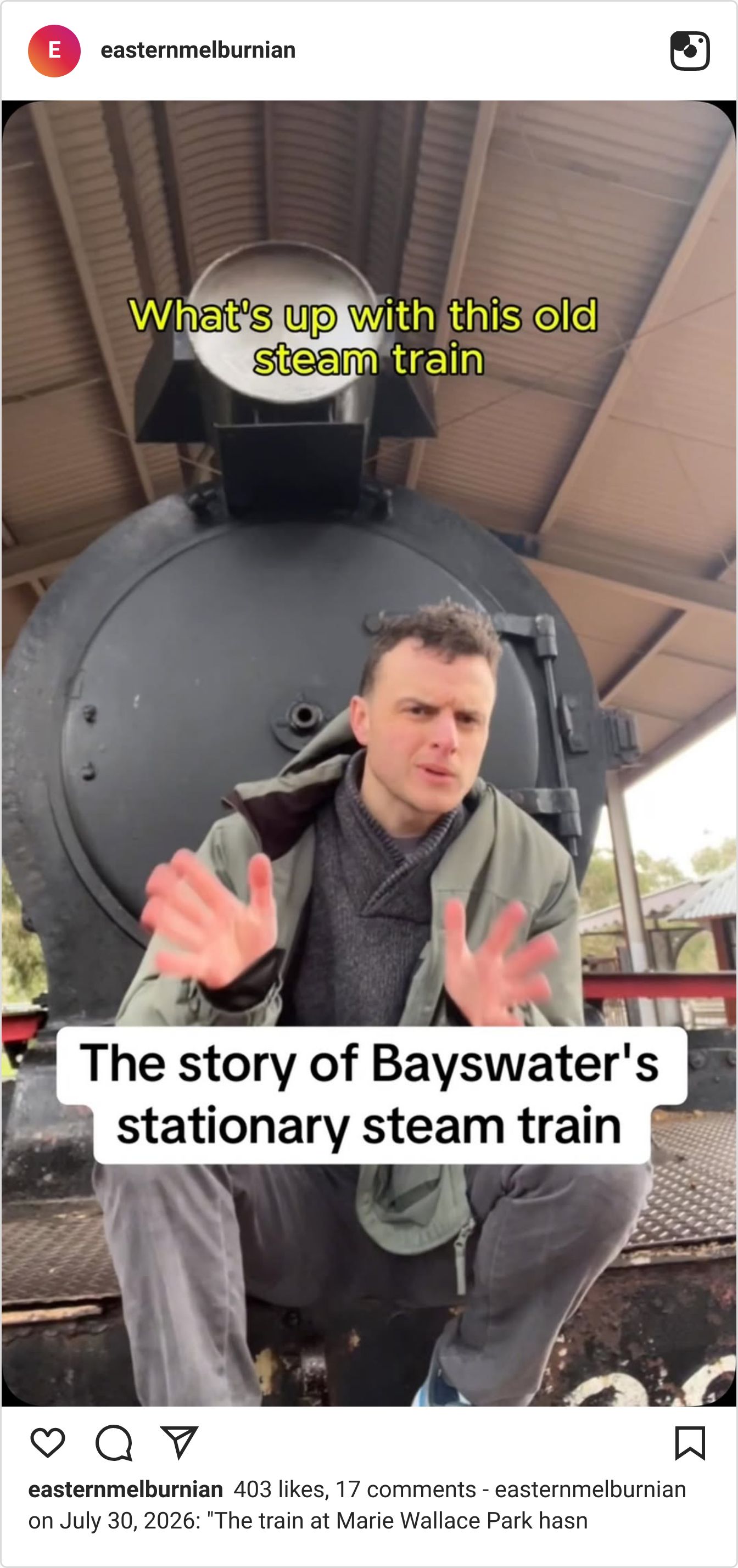
🚂 Finally: I let my inner child run wild late last week with a visit to the Marie Wallace Park in Bayswater and the steam locomotive.
🗓️ A reader reached out to me to let me know it had been a permanent fixture of the park for 60 years.
🔎 I also saw a few readers in the comments noting that it’s technically not a train if it’s not connected to cars carrying cargo. I stand corrected!
That’s all from me this time.
Cheers,
Matthew