
⏱️ The 133rd edition of our newsletter is a seven-minute read.
Hi there 👋
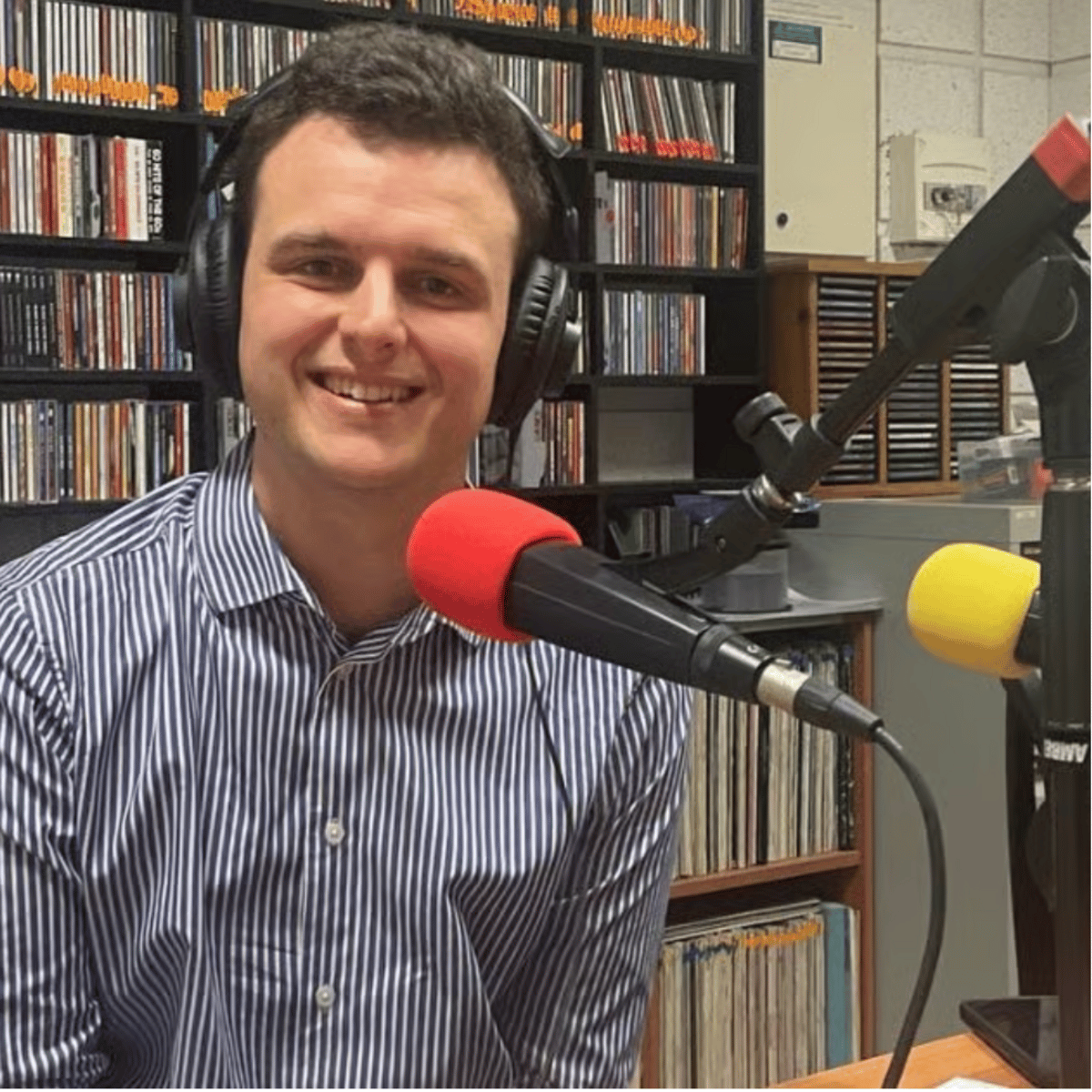
Matthew Sims here, your reporter at the Eastern Melburnian.
💰 I’ve been hooked on records ever since my dad brought back a crate full of vinyl that people threw out in their skip bin.
Now, with some records chasing up $80 or more apiece, they’re definitely become more than just a collector’s item.
🎶 I popped into Dixon Recycled Records earlier this week, a local hub for second-hand records — and indeed all second-hand physical media — to speak with manager Douglas Walsh about the history of the business as they celebrate 50 years of servicing the community.
👂 Do you still have a large vinyl collection? Or do you have good memories of popping into Dixon’s? Let me know by reaching out via [email protected]
Today we’re covering:
How residents across Melbourne’s east are boosting urban biodiversity and cooling with native nature strip plantings;
The Blackburn record store that has weathered the ebbs and flows of vinyl’s popularity; and
The waiting game a number of eastern Melbourne councils are playing over the mandatory rollout of a new glass-only recycling bin.
“There was no grass left, not even weeds would grow. It adds instant appeal to where you live.”
Deborah Isherwood helped inspire a grassroots movement among fellow apartment owners in a Hawthorn apartment complex to plant native plants in the nature strip.
WHAT’S COMING UP 🎟️
FRIDAY 01/05/26, 8PM | Ruthie Foster
SUNDAY 03/05/26, 10AM-4PM | Kalorama Chestnut Festival
SUNDAY 03/05/26, 11AM-3PM | Glenroy Festival
THURSDAY 07/05/26 TO SUNDAY 10/05/26 | Melbourne Writers Festival
FRIDAY 08/05/26, 8.30-11PM | Kris Mizzi
SATURDAY 09/05/26, 10AM-10.30PM & SUNDAY 10/05/26, 10AM-5PM | Healesville Festival
SUNDAY 10/05/26, 8-11AM | Mother’s Day Classic
FRIDAY 15/06/26, 8-9.50PM | Steve Kilbey
SATURDAY 16/06/26, 8PM | Rogue Traders
EVERY DAY FROM 10AM-5PM | Play School: Come and Play!

📰 THIS WEEK’S HEADLINES
For years, Canterbury couple Glenn Ryan and Nardia Papas were frustrated by the dying grass on their nature strip.
But three years after planting native vegetation, they say it has improved both the streetscape and their connection with neighbours and passersby.
They are among a growing number of eastern Melbourne residents replacing grass with native plants to support biodiversity, pollination and cooling.
Across metropolitan Melbourne, the east has the highest urban tree canopy cover at 25.9 percent. Street trees and nature strips make up about 15.7 percent of this.
Climate projections suggest that by 2055, the region’s average annual temperature will rise by 0.8 to 1.5°C, while rainfall will fall by 5.1 to 7.5 percent.
A University of Melbourne study found that a five percent loss in tree cover can increase air temperatures by one to two degrees.
Ryan and Papas began planting Indigenous species in late 2022. Papas said the plants required little maintenance.
“Often through summer, the grass would die, whereas the plants have really thrived there,” Papas told the Eastern Melburnian.
In Hawthorn, residents of an Auburn Road apartment block faced a similar problem. When the building was completed, the nature strip was left as gravel.
Residents Deborah Isherwood and Jill Walker were among those who worked to restore the verge, replacing gravel with native plants, mulch and ground cover around an existing tree.
“There was no grass left, not even weeds would grow,” Isherwood told the Eastern Melburnian. “It adds instant appeal to where you live.”
Monash University Emeritus Professor Nigel Tapper said greener nature strips could help reduce urban heat.
“The more the green cover, the lower the heat,” Tapper told the Eastern Melburnian. “You could quite easily achieve two or three degrees of air temperature cooling on a heat wave day.”
Nature strips are managed by local councils, which generally aim to retain them as green space while allowing access for utilities.
Boroondara Council recently updated its guidelines, recommending permits for residents who want to plant native groundcovers and small shrubs to create habitat for birds, insects and lizards.
Monash Council runs a Nature Strip Planting Project, offering approved residents 50 free Indigenous seedlings and a $50 garden centre voucher.

Dixon Recycled Records in Blackburn has never given up on vinyl. The store, celebrating 50 years of operation this year, has been selling new and second-hand records since 1976.
The Eastern Melburnian spoke with manager Douglas Walsh, who joined DRR 39 years ago at the age of 21.
Dixon Recycled Records began in 1976 as a way for owner David Dixon to trade old 45-inch records from the 1950s and 1960s he would then use to stock his jukebox hire company.
Since then, the business has opened and closed other locations, including Camberwell, Prahran, Dandenong and Heidelberg, while their secondary location in Northcote remains open.
Dixon has remained the owner throughout the business’ lifetime, but is now semi-retired.
The Blackburn warehouse stocks more than 100,000 products across records, CDs, cassettes, Blu-Ray, DVD and VHS.
Walsh said Dixons had been a “very nice environment” to work over the years, with employees and regulars coming and going, always listening to new and old music.
“I’ve always been a big music fan from my mid-teens onwards and a bit of a music junkie, buying up lots of records,” Walsh told the Eastern Melburnian.
Walsh said when he first started in the late 80s, CDs were just starting to increase in both popularity and accessibility.
“We had three or four CDs on the counter that were in a little box – that was the extent of our CD collection, which obviously snowballed over time,” said Walsh.
The major hit to the popularity of vinyl came in the early 90s, when CDs caught on and records began to fade off into the distance. That was until 2007, when the “vinyl revival” started to take hold.
“I don't think vinyl will ever go away,” Walsh told the Eastern Melburnian. “It receded for a while, but it's back quite strongly now. People like the process of putting it on and the sound you get from physically putting a needle on a record.”
Walsh said CDs were also experiencing a comeback, due to people leaving streaming services, poor sound quality and the overall security of access.
”Sometimes, you'll be listening to something and then the next day it won't be there,” said Walsh. “I think people are realising the sound quality is better on CDs than it is on a lot of streaming services. I think the death of CDs has definitely been over-publicised.”

Eastern Melbourne homeowners are anxiously waiting to see how the next year will play out, as councils engage in a game of chicken over a government-mandated glass recycling bin.
All councils must introduce a separate glass recycling service by July 1, 2027, or breach legislation passed in 2021.
So far, 42 of Victoria’s 79 councils have adopted the system.
Several eastern councils — including Knox, Manningham, Maroondah, Whitehorse, Monash, Yarra Ranges and Boroondara — remain opposed, instead calling for the state’s Container Deposit Scheme (CDS) to be extended to all glass waste.
Since November 2023, Victoria’s CDS has allowed residents to return eligible drink containers, including some glass bottles like beer and cider, for a 10-cent refund. Other glass bottles, including wine and spirits bottles, have remained ineligible.
A Victorian Government spokesperson said the glass bin would complement the Container Deposit Scheme by allowing disposal of ineligible items through kerbside collection.
“We’ve invested $129 million to help councils to reform household recycling, including to buy new bins, improve drop off facilities, deliver education campaigns, and ensuring that they have the infrastructure in place to roll out the four bin system,” said the spokesperson.
Independent modelling, which examined 22 separate councils on behalf of Victorian councils, found introducing a glass‑only kerbside recycling service would incur a cost of about $4 million per council, adding an average $27 annual charge per household.
At this rate, the total cost would reach $316 million, with each council needing to fund about $2.36 million from their own accounts.
The director of waste and circular economy advocacy group Boomerang Alliance, Jeff Angel, said a separate glass bin was “unnecessary”, calling instead for the government to consider expanding the state’s Container Deposit Scheme to include all glass and increase the refund to 20 cents.
“The cost that the council will impose for having a purple bin will be applied to all ratepayers, whether they use a lot of glass containers or not,” Angel told the Eastern Melburnian.

🌞 A SLICE OF THE EAST
Cars and chestnuts: May’s main events in the eastern suburbs
Can you believe we’re already a third of the way through the year?
If you’re unsure how to make the most of the limited amount of sunny days left, check out our list of some of the key events taking place during May.

Pastries and pies: The east’s best bakehouses
Did you see our list of the best bakeries across Melbourne’s eastern suburbs? Take a look to see if we overlooked your favourite stop on a Sunday.


After coming back from Dubai recently — where the main attractions are malls that seem to be open and bustling 24/7 — one of the biggest differences I’ve noticed is how early our shops close. Especially in Melbourne’s east.
Have you ever found yourself craving a coffee to get you through the 3.30pm slump at work, but found that most cafes are closed? Or been looking for a late-night bite, only to find most restaurants are shutting up for the night?
Let me know what extended opening hours would mean for you!
Cheers,
Matthew